Category: News
Marc Karlin’s ‘Utopias’ (1989)
The film is not about definitions it is more an invitation to see whether there is still a place for the word us in the current political vocabulary.
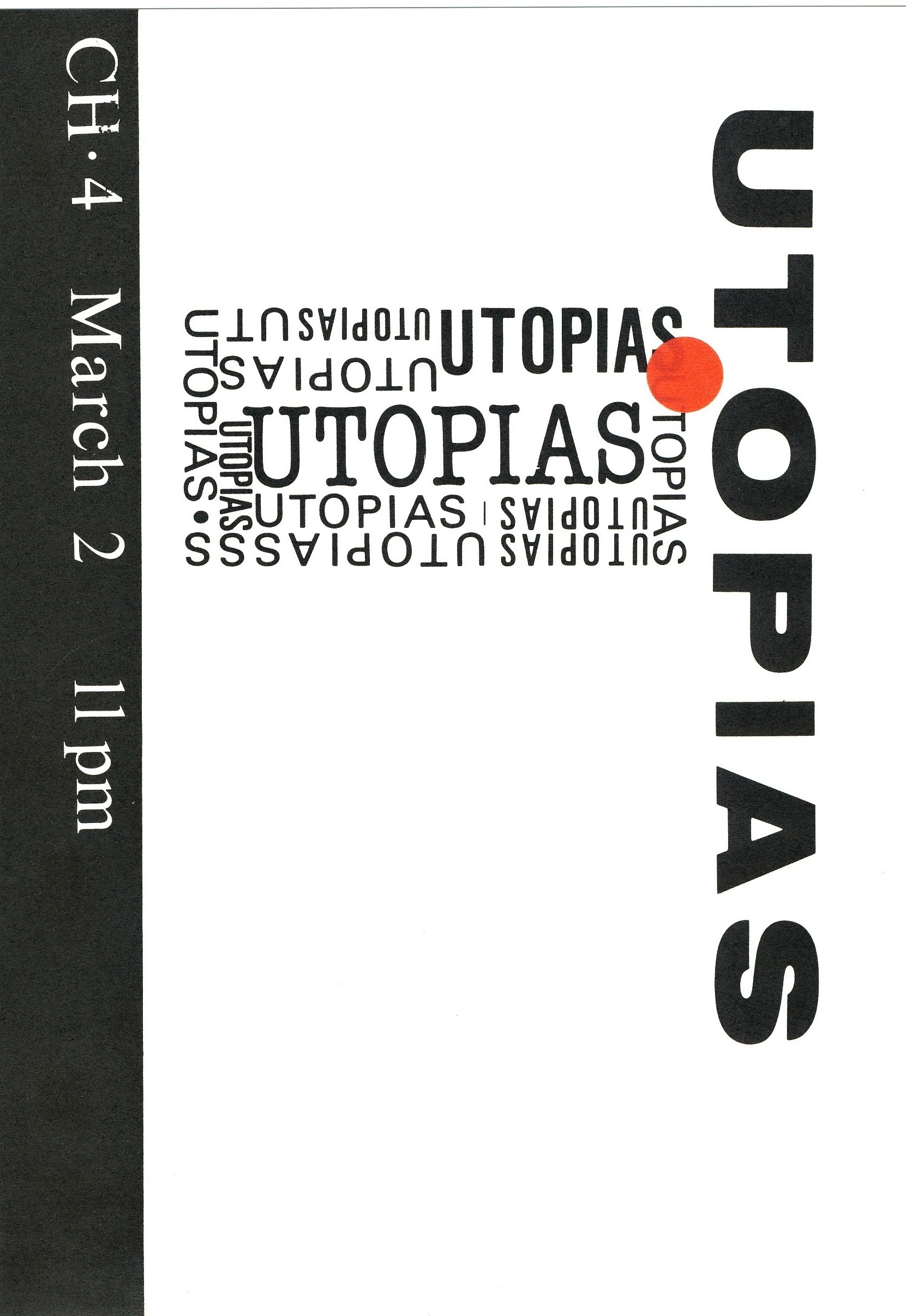
Broadcast 1 May 1989 Channel 4 (ELEVENTH HOUR) repeated 2 March 1992 Channel 4 (GLOBAL IMAGE) (135 mins)
Seven visions of socialism invited to the banquet table: former union leader (TGWU), Jack Jones; miner’s wife, Marsha Marshall; London GP, David Widgery; economist, Bob Rowthorn; historian, Sheila Rowbotham; the editor of Race and Class, Ambalavaner Sivanandan; and the Cravendale Furniture Co-operative.
Director – MARC KARLIN
Production Company – LUSIA FILMS
Producer – MARC KARLIN
Script – MARC KARLIN/DAVID GLYN
Editor – BRAND THUMIN
Assistant Editor – ANNA LIEBSCHNER
Lighting Cameraman – JONATHAN BLOOM
Assistant Cameraman – CARL ROSS
Sound Recordist – JOHN ANDERTON
Dubbing Mixer – PETER HODGES
Grip – GLYN FIELDING
Lighting – JO McGINTY/RAY BATEMAN
Production Designer – MIRANDA MELVILLE
Art director – HENRY HARRIS
Assistant Art Director – GINA CROMWELL
Models – JAMES CLANCY
Construction – GUY ROSE/KEVIN MARTIN
1930’s Worker – DUNCAN McDONALD
Thanks to SID BROWN/JOHN GORMAN
Trainee – J.J ODERA
Production Manager – SHELLEY WILLIAMS
Production Accountant – PATRICIA COLLINSON
New Exhibition at Muzeum Sztuki In Lodz – Inoperative Community II

“Rozdzielona Wspólnota – The Inoperative Community II” is an exhibition of experimental narrative film and video made since 1968 that draws on work made for cinema, television and the gallery, signalling the overlapping and entangled histories of these sites.
Originally conceived for Raven Row in London, this new iteration for Muzeum Sztuki includes a brand new exhibition design and a revised selection of works.
Now I Know Why I Did It! by Alan Fountain, former Channel Four Commissioning Editor, Independent Film & Video Dept.
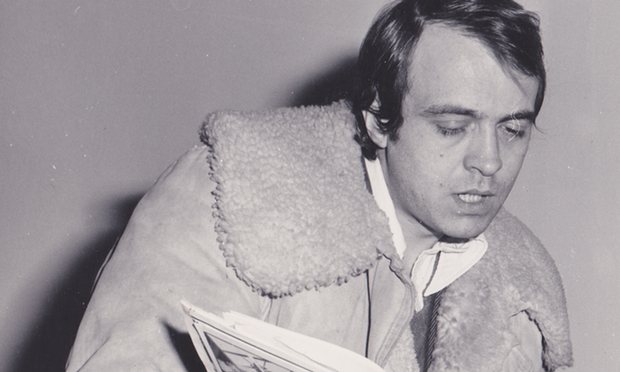
Alan Fountain.
I first became aware of Marc Karlin’s film-making at the screening of Nightcleaners at the Edinburgh Film Festival in 1976. The film made a very strong impression. I had not seen anything like it before in Britain. “Political” film, yes. Formal experiment, yes. But not the combination. And although I can recall a sense of worry about what I conceived as a possible lack of political urgency, I also remember an excitement at discovering something closer to what I was looking for in the 1970s.
At the time I was completely absorbed in a search for a progressive form of film-making, one which sought a new and adequate form through which to express a revolutionary conception of the world whilst at the same time respecting, or at least holding on to, a perceived need for an element of agit prop – maybe a reinvention of Dziga Vertov. I think there was a rediscovery of the “Workers Films” of the 1920s and ‘30s at the same Edinburgh Festival.
Within the next three or four years I had seen Marc’s next two films, Ireland Behind the Wire and 33 to 77, both of which I admired for different reasons. Ireland Behind the Wire because it was unafraid to take sides in a struggle. It was clearly on the side of the besieged nationalist community, and blew apart the comfortable and ultimately deceptive ideology of “balanced” reporting to be found on British television at the time. 33 to 77, which I have not seen since the early 1980s, I remember as a film of tenderness and incredible formal daring.
I began work as Channel Four’s first commissioning editor of Independent Film & Video in 1981, with a very open brief as to how that Department should be defined. Although the Thatcher government was two years into its long reign by then, my Department and many of my commissioning colleagues at Channel Four represented the ideas and politics of the late 1960s and 1970s. Voices from the left, questions of race, class and gender, internationalism, the formal experimentation actually written into the parliamentary legislation which brought Channel Four into being – all this was central to the early Channel Four. A huge release after years of stifling aesthetic and political conservatism from the BBC and ITV.
Independent Film & Video, self defined as the cutting edge of the cutting edge of British television, was able to embrace formal experimentation and political radicalism in an effort to give space to new voices, ideas and images, and simultaneously provide a critique of the rest of televisual output. The four programmes that I commissioned Marc to produce between 1984 and 1993 all fell within this broad policy.
I supported and identified with Marc’s engagement and involvement with the national and international left. He produced Nicaragua, a four programme series about the processes, hopes and fears of the revolution; Utopias, a two-hour film centred around the period of the miner’s strike; Scenes from a Revolution; and Between Times, a programme about Thatcherism, the Left, memory and change.
I valued Marc’s passionate concerns about these major issues. He realised all too clearly that the resolution to the Nicaraguan revolution and the miners’ strikes were central to defining the world in which we now live. In his films he struggled to find the appropriate form to represent the broader issues but, perhaps above all, to carve out a space of dignity and respect for the invariably rather powerless grass-roots actors in those epic events. It was his commitment to grappling with this set of aesthetic and political problems to which I responded as a commissioning editor.
Our discussions prior to the making of the films often circled around issues concerned with audience and the political moment, clarity and obscurity. For all my support of his work I had reservations on these questions, and tried to push him towards what I perceived to be a greater directness and clarity of political purpose. My attempts at persuasion never really worked, and I was left feeling deeply ambivalent, on the one hand remaining convinced of Marc’s considerable film making talents, on the other feeling that a wider audience could have been reached, a bigger political splash made.
I had not seen the films for some time, but recently had the opportunity to see Nightcleaners and part of the Nicaraguan series again, and was wonderfully surprised to find myself able to celebrate and understand them in a completely fresh way. Both seemed to me to be incredibly valuable documentations of people and events now fading from memory or, for younger people, never known. Here were two films of insight, clarity, and sensitivity of inestimable value – not least to anyone interested in socialism.
I now look forward to re-viewing Utopias, Between Times and Scenes from a Revolution. In the meantime these thoughts raise interesting issues for the past and present. One of the most important aspects of Independent Film & Video was its support for a range of aesthetic strategies, stretching from the very populist to the highly experimental; thus it offered a real choice for audiences. The department repeatedly commissioned Marc Karlin because we thought – even with some trepidation – that he was a significant film-maker. The Channel backed us to back him, win or lose.
I hope that a new Marc Karlin would be commissioned in the television climate of today… and fear that he or she might not. Walking the tightrope of supporting talented programme makers, particularly if they do not easily fit into prescribed patterns and boxes, is a difficult business. It is undoubtedly much more so now than in the early days of Channel Four, but there are few signs that the broadcasters have any interest in walking the tightrope, or possess the imagination or sense of public responsibility to do so.
What I take away from all this is the somewhat baffling certainty that commissioning Marc’s films for ten years was the right decision, even if it has taken me nearly ten more to appreciate quite why!
“Channel 4 was tasked by parliament with encouraging innovation and experiment in the form and content of programmes. Alan did that, and more”. Alan Fountain obituary by Jeremy Isaacs.
Alan Fountain encouraged innovation and experiment in the form and content of programmes at Channel 4
My colleague Alan Fountain, who has died unexpectedly aged 69, played a leading role in developing independent film in the UK, and the workshop movement that formed part of it. In 1981 he joined the infant Channel 4, and for 13 years, as commissioning editor for independent film and video, brought into being two strands of programming, The Eleventh Hour and People to People, which added an entirely new dimension to what viewers saw on television.
Channel 4 was tasked by parliament with encouraging innovation and experiment in the form and content of programmes. Alan did that, and more.
Born in Chelmsford, to Bim (nee Browne) and Harold Fountain, who were teachers, he wrote about horses for Sporting Life and took a degree in philosophy and film studies at Nottingham University.
In Birmingham, the Black Audio Film Collective showed, in Handsworth Songs, race and racism as black Brummies experienced it. In Newcastle, Amber, now a photographic collective, made Seacoal, about impoverished men and women scouring coal from the seashore. It won a Silver Bear at the Berlin film festival.
People to People offered access for community programme-making, often dealing with working lives, in factories, hospitals and on the land. In Yellow Bellies we met agricultural labourers working on Lincolnshire clay.
Season after season, The Eleventh Hour on Monday evenings at 11 o’clock presented an unpredictable melange: British independent film-makers Malcolm Le Grice or Margaret Tait, the new cinema of Latin America, film-making from Africa, Nicaragua, the emergent world, and long runs of Jean-Luc Godard. Ideas were traded and alliances formed, including one in Germany with Eckart Stein’s Das Kleine Fernsehspiel, licensed to experiment by ZDF.
Parochialism went out of the window; the world was our oyster.
When Alan left Channel 4 he went international: teaching, advising, consulting. He formed Mondial, with Sylvia Stevens, in 1994, developing a digital platform to connect independent film-making internationally – way ahead of its time.
In his last years, Alan surprised us again; he studied and practised psychotherapy, making further use of the empathy he had with people’s minds and hearts. He made a lasting mark on everything he touched.
He is survived by his wife, Tess (nee Woodcraft), whom he met in 1970, his children, Jack and Billie, and grandson, Rudi.
by Jeremy Isaacs. Via The Guardian
Courtisane Festival 2016, 23-27 March!

The themes of political cinema and the essay film will be explored in the next instalment of the Coutisane festival running from 23-27 March 2016. Pieter-Paul Mortier and Stoffel Debuysere have curated a vital selection of films over the weekend 25-27 March, including Poster Collective, Cinema Action, Black Audio Film Collective, Berwick Street Film Collective and Marc Karlin. Below are some beautifully crafted extracts from the programme.
There is a traffic of images, he wrote, with controllers qualifying and quantifying and giving these images permission to arrive, telling them where to arrive. These controllers then turn themselves into custom officers – Art Cinema this way – Commercial Art that way – Author Cinema straight ahead – Popular Cinema over here – Genre this and Genre that. You can declare your preferences. Experimental Cinema, may we open your bags, please?
And yet, he continued, there not only exists a welcome space for surprise, but there is also a real need for a cinema that will leave its designated niche; a cinema where the tension between a world that is being illustrated and a world that is being illuminated can make us live again in that dream-state so necessary to our very breathing; a cinema, therefore, that will hurt itself against that current order of things, a cinema that will deliver once again that wonderful surprise – that which is still possible.
An echo from far away, yet so close. These thoughts were formulated just over two decades ago by Marc Karlin, who is one of the key figures in this year’s festival programme. Never really at ease amongst the mourning choir of those grieving the irrevocable demise of cinema, he chose to keep on tirelessly searching for a cinema of the possible, one that sets out to keep discovering the world we are living in. This festival is dedicated to the work of reluctant heroes such as Karlin and countless others who today continue to embark on the path of cinematic discovery. Oftentimes ignoring guidelines and sidestepping roadmaps, regularly haunted by uncertainty and confronted with precarity, time and again forced to be on the defensive and pushed towards the margins, but always driven by a single stubborn belief: that cinema continues to offer us possibilities of life.
A few years ago, a six-year-old girl accompanied her father to one of the screenings at the festival and she asked him: “When I blink my eyes, don’t I interrupt the image for the other people here in this theatre?” With this 15th jubilee edition, Courtisane hopes to stay young, to create a meeting space where this question is at home.
“Wanting to believe has taken over from believing,” a filmmaker observed. But the uncertainty did not stop filmmakers from making films, just as it didn’t stop movements from occupying the spaces that the traditional counter-forces had excluded and abandoned. Instead of holding on to the plots of historical necessity and lures of an imagined unity, they chose to explore twilight worlds between multiple temporalities and realms of experience, situated in the wrinkles that join and disjoin past futures and future presents, memories of struggle and struggles for memory.
Special thanks to Andy Robson / Marc Karlin Archive.
1
“The film was about the distance between us and the nightcleaners, between the women and the nightcleaners, and was choreographing a situation in which communication was absolutely near enough impossible. I mean, there were these women who were in the offices at night who would wave, or sign or whatever, and sometimes we had to get into offices through very, very subterfuge-like means. The women’s movement came mainly from a kind of middle-class background, and I got in terrible trouble for even saying there were distances, or making a film about distances, and that is what I wanted to do, by and large… The nightcleaners haven’t changed, and it always comes back to this idea, you know, of W.H. Auden and all those people who say: “Well, you know, a poem won’t stop a tank.” Maybe not, but a poem can actually reveal a tank and… I think with Nightcleaners what we did was we revealed the situation of the nightcleaners on the one hand and on the other, the impossibility of capturing those lives.” (Marc Karlin)
2
“To me ‘36 to ’77 is very important for the way it changes the understanding of how you live with representations. The normal film or television experience leaves you without any trace. It doesn’t hurt you at all to look at it. With ’36 to ’77 I realised how people desperately desire a certain normality for film. It’s such an obsessive need, and when for instance political people see the idea of rendering their politics visible, it completely breaks them apart. A film does test how real your politics are, to the extent of confronting you with something that breaks the very boundaries in your writing. Film acts as a sort of dislocating lever. There’s a lot of left rhetoric about personal politics which is actually a refusal to take personal politics seriously – it’s a refusal to dismember yourself, to re-think, re-phrase, re-constitute yourself in the light of your actions and the things in front of you. It’s a refusal to see age, to see change, to see distances, always taking the same photograph of yourself, wherever you are…The representation of workers on film is normalised because it’s always surrounded by and held in the situating of them as workers in a recognisable political situation, and which a lot of people might not be sharing. The idea that they might have other things that would contradict your idea of them never obviously comes into play now.” (Marc Karlin)
Produced between 1977 and 1982, this film remained on the shelves until the BBC finally broadcast it in a sleepy afternoon slot in March of 1986. For Memory is a contemplation on cultural amnesia, written as a reaction to Hollywood’s Holocaust films, a serialisation of the genocide. Karlin asks: how could a documentary image die so soon and be taken over by a fiction? Seeing that an enormous amount of documentation exists, why did it take a soap opera to have the effect that it did?
“The film came out of a showing of a Hollywood series on the Holocaust. I was deeply shocked by it because of its vulgarity and stupidity… And yet, and yet…! In a sort of Auden-tank sense, it had an enormous effect! In Germany, for instance, where children saw it and were given history books or packages to do with the camps, and so on. I was really disturbed that something like this Hollywood series established some kind of truth, and I just wondered where another kind of truth had disappeared, which was that of the documents. The documents had died to the point where, much later on, in Shoah, Lanzmann would not use a single document. So, I was interested in kind of pursuing them. That led me to think out how, in the future, an imaginary city would remember – because it was the very convenient thing to say that modern times are totally to do with amnesia.” (MK)
4
So That You Can Live developed from a project called The Social Contract, which the Cinema Action collective began in the mid-1970s. When filming in Treforest, South Wales, the filmmakers met Shirley Butts, a union convenor who was leading a strike by women demanding equal pay. In the subsequent five years, they documented the impact that global economic changes had on her and her family. As Marc Karlin remarked, So That You Can Live is “a film of and in transit – from city to countryside, from employment to the dole, from generation to generation, from power to powerlessness”.
“The most important British independent film since Berwick Street Film Collective’s Nightcleaners, Cinema Action’s So that you can live (For Shirley) is in many ways a very simple film, about a family in a South Wales valley community which has been struck down in the last five years – the period over which the film was made – by the socially destructive consequences of pit and factory closures and the resulting unemployment… Slow and beautifully controlled, a poetry unfolds in this film of enormous depth of feeling and lucid intelligence, and in this way it becomes a passionate plea for the voice of conscience to be heard again in the labour movement. For the word and the idea to become once again part of our vocabulary, as it was for previous generations. For us all to look around and see, in the shapes and forms of our environment, what parents and grandparents tell to those who ask of what is only recently past, the history of Living memory.” (Michael Chanan)
5
The Year of the Beaver documents the strike at the Grunwick film processing factory in North London in 1976-‘78, which was then described as “a central battleground between the classes and between the parties”. The film, which incorporates a lot of the material from the reporting that was being produced at the time, is not only a documentary of a strike, but a portrait of an historical period, as it underwent transition to the modern ‘civilized’ state under Thatcherism.
“It wasn’t until the early eighties that a film called The Year of the Beaver emerged and I first really met Marc Karlin as he hugged me on seeing it. A film which had, for all the efforts of the inexperienced people who had worked on it, managed to create layers of meaning and make connections between the myriad of things it had had to take on board. It showed what had come to be viewed as the seeds of Thatcherism developing long before her reign. This mammoth work had been years in the making, years in editing rooms struggling for ways and means to illuminate a story that needed to be told, to find an adequate form in which to tell its tale.” (Steve Sprung)
Followed by a DISSENT! talk with Ann Guedes (Cinema Action) and Steve Sprung (Cinema Action, Poster Collective).
DISSENT! is an initiative of Courtisane, Auguste Orts and Argos, in the framework of the research project “Figures of Dissent” (KASK/Hogent).
6
1985, UK, 16mm to video, English spoken, 42’
The first film in Marc Karlin’s four-part series on the Nicaraguan revolution that brought down President Somoza’s regime in 1979, Voyages is composed of five tracking shots, gliding over blown-up photographs that Susan Meiselas took during the insurrection. The film takes the form of an imagined correspondence, which interrogates the responsibilities of the war photographer, the line between observer and participant, and the political significance of the photographic image.
“Photographs are in a way far ahead of our ability to deal with them – we have not yet found a way of dealing, living with them. We have appropriated them in a channel – ‘language’, ‘papers’, ‘magazines’, ‘books’ – all of which seem the only tools by which we can give them an earthbound gravity. We brush past them, flick them, demand of them things they cannot give… Liberate photographs from its priests and jujumen – including myself. We do not need interpreters. We need looks – and thus the task is up to the photographer to renew his or her contract i.e. what can photographs and their arrangement do to defy the prison house interpretation à la John Berger – and make us think of ourselves in relationship to Nicaragua.” (MK)
Black Audio Film Collective / Auguiste Reece
Twilight City
1989, UK, 16mm to video, English spoken, 52’
“The film presents an imaginary epistolary narration of a young woman’s thoughts as she writes to her mother in Domenica about the changing face of London, then in the throes of the new Docklands development. She fears it is a city that her mother would not now recognise should she return. The film cuts between this narrative voice and interviewees bearing witness to their youthful experience of the city as a territory mapped by racial, cultural, sexual, gender and class boundaries, a place ‘of people existing in close proximity yet living in different worlds.’ This polyvocal narrative moves restlessly back between past and present, reflecting on the loss of roots and erasure of history caused by the demolition of old established neighbourhoods. The further displacement of already marginalised communities falls under the shadow of the films’s recurrent motif of the public monument to a heroic British imperial history notable for its effacement of its disruptive descendants.” (Jean Fisher)
7
Revisiting material of his earlier four-part series, Marc Karlin returns to Nicaragua to examine the history of the Sandinista government, to consider its achievements and assess the prospects for democracy following its defeat in the 1990 general election.
“For ten years, the Sandinistas had tried to make democracy mean access to education, health, nationhood, and the sense of collective responsibility. Now in one swift move Nicaragua found itself suddenly transplanted to the political events of Eastern Europe. It was as if differences, identities, separate histories, could all be electronically and democratically jammed. But then in this day and age, anyone and everyone could speak the word democracy. What it meant, what it felt like, what it could be as opposed to what it was not no-one would dare say. As if a democracy to really work had to be by definition valueless, orderless, heard but not seen. As if democracy could be about nothing else but the right to be left alone… For ten years Nicaragua had been out of the headlines. Now that it was officially declared a democratic nation, it was hardly ever heard of. As if democracy instead of making voices heard was there to silence them, a confirmation after all that history and all its wrongdoings had officially ended. But these images, so often seen in films on the third world, to the point of invisibility, were the product of a bitter poverty which had not been erased.” (MK)
Conrad Landin on Marc Karlin at AV Festival 2016

Promised You A Miracle – Video Essay by kpunk
A video essay made by Mark Fisher (kpunk) to introduce a talk by Andy Beckett on his new book, Promised You A Miracle: UK 80-82. The event took place in the Department of Visual Cultures, Goldsmiths on 12th October 2015.
Andy Beckett’s ‘Promised You A Miracle: UK 80-82’ is a stunning new political and cultural history of the early 80s. At the event, Beckett discussed the book with Mark Fisher (author of ‘Capitalist Realism’ and ‘Ghosts Of My Life’). Much of the neoliberal world was built between 1980 and 1982 – but are there any progressive promises from the period which can be returned to now?
via Repeater Books
AV Festival Launch 2016 – Friday 26th Feb
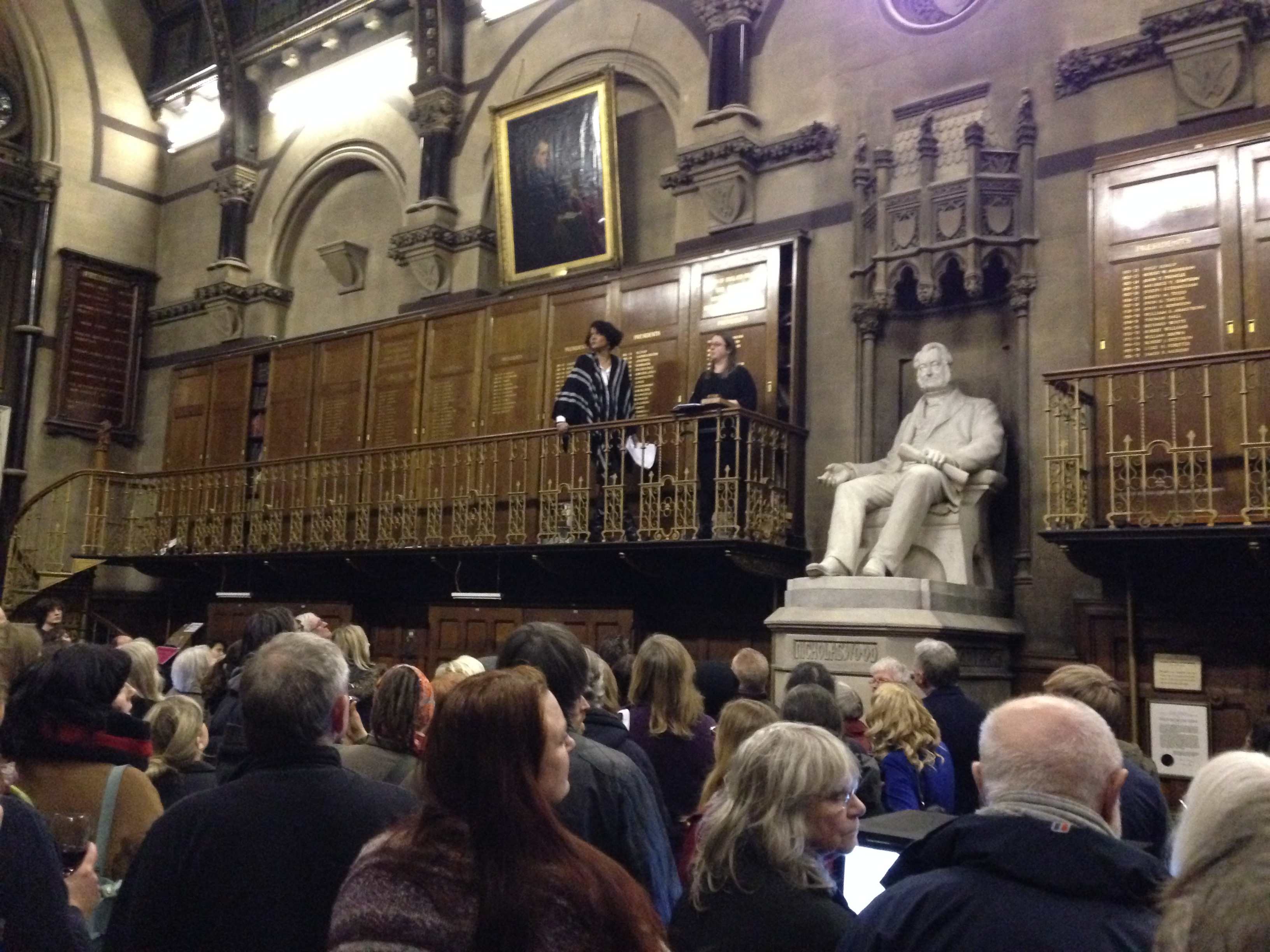
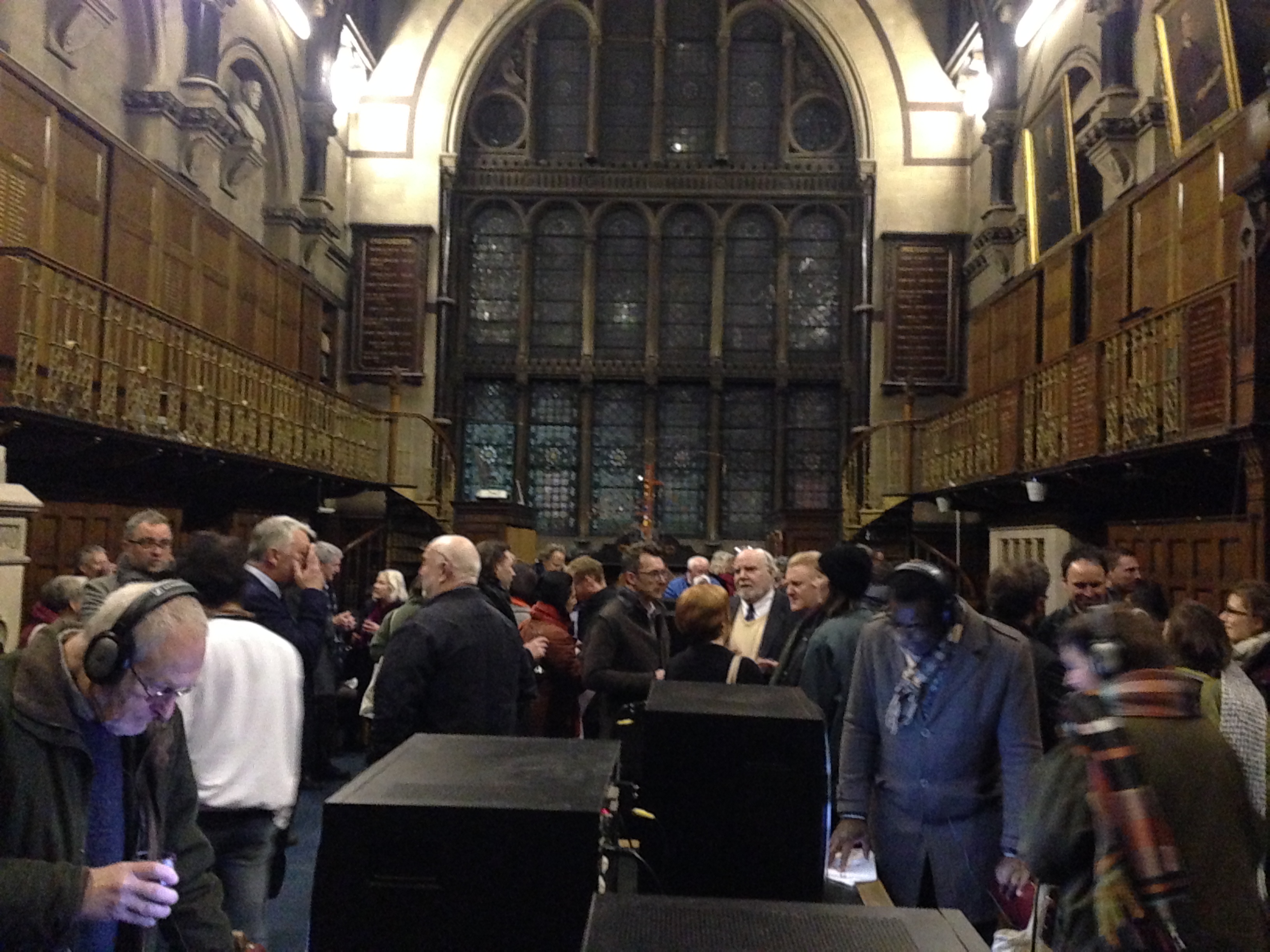
The AV director, Rebecca Shatwell and MP Chi Onwurah, Shadow Minister for Culture & the Digital Economy, launch the AV Festival at the Mining Institute, Newcastle.

Scenes For A Revolution (1991) – directed by Marc Karlin – Available @Vimeo

Broadcast 13 May 1991 Channel 4 (GLOBAL IMAGE) (110 mins)
Karlin returns to Nicaragua after five years to examine the history of the Sandinista government and the prospects
for democracy following their defeat in the general election of 1990. Narrated by Stephen Rea.
Cinema Action – UK Radical Film Collective films available to buy and stream
Cinema Action was among several left-wing film collectives formed in the late sixties. The group started in 1968 by exhibiting in factories a film about the French student riots of that year. These screenings attracted people interested in making film a part of political activism. With a handful of core members – Ann Guedes, Gustav (Schlacke) Lamche and Eduardo Guedes – the group pursued its collective methods of production and exhibition for nearly twenty-five years.
Cinema Action‘s work stands out from its contemporaries’ in its makers’ desire to co-operate closely with their working-class subjects. The early films campaigned in support of various protests close to Cinema Action‘s London base. Not a Penny on the Rent (1969), attacking proposed council rent increases, is an example of the group’s early style.
By the beginning of the seventies, Cinema Action began to receive grants from trades unions and the British Film Institute. This allowed it to produce, in particular, two longer films analysing key political and union actions of the time. People of Ireland! (1971) portrayed the establishment of Free Derry in Northern Ireland as a step towards a workers’ republic. UCS1 (1971) records the work-in at the Upper Clyde Shipyard; it is a unique document, as all other press and television were excluded.
Both these films typify Cinema Action‘s approach of letting those directly involved express themselves without commentary. They were designed to provide an analysis of struggles, which could encourage future action by other unions or political groups.
The establishment of Channel Four provided an important source of funding and a new outlet for Cinema Action. Films such as So That You Can Live(1981) and Rocking the Boat (1983) were consciously made for a wider national audience. In 1986, Cinema Action made its first fiction feature, Rocinante, starring John Hurt.
via BFI
UK independent filmmaker Chris Reeves has made a selection of Cinema Action’s films available to stream and download on his Vimeo On Demand page. See them all here.
 marckarlin