Broadcast 1 May 1989 Channel 4 (ELEVENTH HOUR) repeated 2 March 1992 Channel 4 (GLOBAL IMAGE) (135 mins)
Seven visions of socialism invited to the banquet table: former union leader (TGWU), Jack Jones; miner’s wife, Marsha Marshall; London GP, David Widgery; economist, Bob Rowthorn; historian, Sheila Rowbotham; the editor of Race and Class, Ambalavaner Sivanandan; and the Cravendale Furniture Co-operative.
Director – MARC KARLIN
Production Company – LUSIA FILMS
Producer – MARC KARLIN
Script – MARC KARLIN/DAVID GLYN
Editor – BRAND THUMIN
Assistant Editor – ANNA LIEBSCHNER
Lighting Cameraman – JONATHAN BLOOM
Assistant Cameraman – CARL ROSS
Sound Recordist – JOHN ANDERTON
Dubbing Mixer – PETER HODGES
Grip – GLYN FIELDING
Lighting – JO McGINTY/RAY BATEMAN
Production Designer – MIRANDA MELVILLE
Art director – HENRY HARRIS
Assistant Art Director – GINA CROMWELL
Models – JAMES CLANCY
Construction – GUY ROSE/KEVIN MARTIN
1930’s Worker – DUNCAN McDONALD
Thanks to SID BROWN/JOHN GORMAN
Trainee – J.J ODERA
Production Manager – SHELLEY WILLIAMS
Production Accountant – PATRICIA COLLINSON
Although informed by an international perspective, most of Karlin’s work focuses on the UK. An exception was the remarkable series of five films on the Nicaraguan revolution encompassing the popular guerrilla war of the late 1970’s, the development of the Sandinista government, the effects of the US-backed contra war, and the defeat of the FSLN in 1989. Rather than foregrounding the Sandinista leadership, the films speak from the grassroots, both urban and rural. This rare perspective portrays a revolution for what it is – an exhausting, uneven process.
Nicaragua Part 1: Voyages (1985)
Broadcast 14 October 1985 Channel 4 (ELEVENTH HOUR) (42 mins)
In 1978–79 American photographer Susan Meiselas documented the two insurrections that led to the overthrow of fifty years of dictatorship by the Somoza family in Nicaragua. Through an epistolary exchange over five unedited tracking shots across Meiselas’ photographs, the film articulates her relationship to the history she witnessed.
Nicaragua Part 2: The Making of a Nation (1985)
Broadcast 21 October 1985 Channel 4 (ELEVENTH HOUR) (80 mins)
Shot in 1983–84 and focusing on the work of the Historical Institute, this film witnesses how Nicaraguans are recovering their history, the memory of Sandino’s struggle, to transform their sense of identity.
Nicaragua Part 3: In Their Time (1985)
Broadcast 28 October 1985 Channel 4 (ELEVENTH HOUR) 70 mins
Through the eyes of journalists and photographers working at Barricada, the official publication of the FSLN, the film observes the problems of putting socialism into practice, with reports on the war, the economy, the prison system and the political process leading up to the 1984 elections.
Nicaragua Part 4: Changes
Broadcast 4 November 1985 Channel 4 (ELEVENTH HOUR) (89 mins)
A portrait of a remote area in the rural north of Nicaragua facing difficulties with the revolutionary process. It follows Marlon Stuart, the regional FSLN political organiser, at the time of the 1984 elections.
Scenes For A Revolution (1991)
Broadcast 13 May 1991 Channel 4 (GLOBAL IMAGE) (110 mins)
Karlin returns to Nicaragua after five years to examine the history of the Sandinista government and the prospects for democracy following their defeat in the general election of 1990.
The Marc Karlin film collection available now on Vimeo On-Demand.
Marc Karlin (1943 – 1999)
On his death in 1999, Marc Karlin was described as Britain’s most significant, unknown filmmaker. For three decades, he was a leading figure within Britain’s independent film community, actively contributing to opening up television through Channel 4. He was a founding member of the Berwick Street Film Collective; a director of Lusia Films, a key influence in the Independent Filmmakers Association, and a creative force behind the group that published the independent film magazine, Vertigo (1993-2010)
His groundbreaking films for television in the 1980s and 1990s combine documentary and fiction film conventions to explore the themes of memory, history and political agency. Karlin was a committed political filmmaker, and his dense, yet subtle films are rich meditations on the nature of filmmaking, the impact of ideologies on political choice and formations, and the necessity for rigorous, open interpretation to safeguard the future of the creative, human spirit.
He filmed his way through three decades of huge change, wrestling with the challenges of Thatcher’s free market economics; the demise of manufacturing; the imagining of socialist ways forward after the fall of the Berlin Wall; the role of art in society and the shape-shifting impact of digital technologies: all key concerns relevant to our world today.
This collection consists of the films broadcast on Channel 4 from 1985 to 1997, predominately commissioned by Alan Fountain Senior Commissioning Editor at Channel 4’s Independent Film and Video Department (1981–1994). Although informed by an international perspective, most of Karlin’s work focuses on the UK. An exception was the remarkable series of five films on the Nicaraguan revolution encompassing the popular guerrilla war of the late 1970’s, the development of the Sandinista government, the effects of the US-backed contra war, and the defeat of the FSLN in 1989. Rather than foregrounding the Sandinista leadership, the films speak from the grassroots, both urban and rural. This rare perspective portrays a revolution for what it is – an exhausting, uneven process.
We regret that Brand Thumim’s work as editor of Nicaragua Part 2: The Making of a Nation and Nicaragua Part 3: In Their Time (1985) has been wrongly credited to Monica Henriquez.
Brand was one of Marc Karlin’s key collaborators and throughout the 1980s lent his creative skills to help Marc develop his own distinctive film language and voice.
We would like to apologise both to Brand Thumim and Monica Henriquez for this proofing oversight.
Sally Potter writes a beautiful, heartfelt foreword in Marc Karlin – Look Again, describing Marc Karlin as a cinematic pioneer, thinker and activist. She also goes on to recall her first meeting with Karlin, after a screening ofNightcleaners, and how he kindly shared the Berwick Film Street Collective’s facilities while she was making her film, Thrillerin 1979.
Here is an interview between Sally Potter and Wendy Toye, broadcast on Channel 4 on 9th May 1984. It was commissioned for the film programme, Visions (1983-1986). John Ellis, who co-produced the programme via his company Large Door, has very recently uploaded a collection of complete episodes from the series. ‘So there is now a Large Door channel for our moribund independent production company, with a selection from the hundred or so programmes we produced’.
Two women directors of different generations – both trained as dancers – meet for the first time. Sally Potter’s first feature ‘Gold Diggers’ had just been released. Wendy Toye’s career began in theatre and she directed her first short ‘The Stranger left No Card’ in 1952. She worked for Korda and Rank, making both comedies and uncanny tales. Directed by Gina Newson for Channel 4’s Visions series, 1984.
Large Door was set up in 1982 to produce Visions, a magazine series for the new Channel 4. Initially there were three producers, Simon Hartog and Keith Griffiths and John Ellis. Visions continued until 1986, producing 36 programmes in a variety of formats. Hartog and Ellis continued producing through the company, broadening out from cinema programmes to cover many aspects of popular culture from food to television.
Visions was a constantly innovative series, and John Ellis’ article in Screen Nov-Dec 1983 about the first series gives a flavour of its range:
Especially during the earlier months of production, we vacillated between two distinct conceptions of the programme: one, the more conventional, to use TV to look at cinema; the other, more avant-gardist, to treat the programmes as the irruption of cinema into TV. […]
We found that virtually all of our programme items could be categorised into four headings:
1) The Report, a journalistic piece reflecting a particular recent event: a film festival like Nantes or Cannes, the trade convention of the Cannon Classics group.
2) The Survey of a particular context of film-making, like the reports from Shanghai and Hong Kong, and the critical profile of Bombay popular cinema.
3) The Auteur Profile, like the interviews with Michael Snow and Paul Schrader, Chris Petit’s hommage to Wim Wenders, or Ian Christie’s interviews with various people about their impressions of Godard’s work.
4) The Review, usually of a single film, sometimes by a literary intellectual, ranging from Farrukh Dhondy on Gandhi to Angela Carter on The Draughtsman’s Contract. About half the reviews were by established film writers, like Colin McArthur on Local Hero or Jane Clarke on A Question of Silence.
The third series of Visions, a monthly magazine from October 1984 added further elements. Clips was a review of the month’s releases made by a filmmaker or journalist (eg. Peter Wollen, Neil Jordan, Sally Potter) consisting entirely of a montage of extracts with voice-over. We introduced the idea of the filmmaker’s essay, borrowed from the French series Cinema, Cinemas, commissioning Chantal Akerman and Marc Karlin to do what they wanted within a limited budget and length. The plan to commission Jean-Luc Godard fell in the face of his insistence on 100% cash in advance with no agreed delivery date. And then there was no further commission.
Charlotte Crofts (2003) Anagrams of Desire: Angela Carter’s Writings for Radio, Film and Television(London: Chatto & Windus), pp. 168–193
John Ellis Channel 4: Working Notes, Screen, November-December 1983 pp.37-51
John Ellis Censorship at the Edges of TV – Visions, Screen, March-April 1986 pp.70-74
John Ellis Broadcasting and the State: Britain and the Experience of Channel 4, Screen, May-August 1986 pp.6-23
John Ellis Visions: a Channel 4 Experiment 1982-5 in Experimental British Television, ed Laura Mulvey, Jamie Sexton, University of Manchester Press 2007 pp.136-145
John Ellis What Did Channel 4 Do For Us? Reassessing the Early Years in Screen vol.49 n.3 2008 pp.331-342
In the lead-up to the release of Marc Karlin-Look Againhere are a collection of portraits focusing on the people Karlin documented in his films.
Hugh Stewart was a film editor and latterly a film producer. After graduation from college he joined Gaumont-British Picture Corporation on an apprenticeship scheme working as an assembly cutter. After impressing Alfred Hitchcock, he was asked to supervise the edit on The Man Who Knew Too Much (1934). Speaking in 1999, Stewart recalls the the production,
When he (Hitchcock) came on stage for the first day of shooting, he put the script down and said, “Right, another one in the bag.” Not that he had any disrespect for the making of the film, but as far as he was concerned, he knew the film so well, it was already in his mind. The Albert Hall sequence was the major example of it.
In the story the mother, Edna Best, went to a concert at the Albert Hall. As she sat there she realised that an assassin was going to kill an ambassador sitting in the Royal Box. The assassin had also stolen her child, so she was there with a double purpose. The words of the chorale being performed included the phrase “Save the Child,” which was an ingenious underlining of the second motif which was in her mind, though not in the visible action. Hitchcock made a variety of shots, and the author had the task of piecing them together, using the music as a frame-work.
And here Stewart recalls his editing work on a Michael Powell production. A similar occasion had arisen during the making of “A Spy in Black,” a good film made by Michael Powell in 1938. A German “U” Boat, with Conrad Veidt as Captain, was making its way through a minefield outside the Orkneys. The quality of suspense was very necessary, so a few chart inserts were shot, some underwater submarine shots were found, and a delightful couple of days were spent working up a sequence.
When war broke out in 1939, he immediately joined the Royal Artillery. He was commissioned in the AFPU (Army Film and Photographic Unit) in December 1940 and led No 2 AFPU in covering the Allied landings in Tunisia in November 1942. A year later he co-directed Tunisian Victory (1943) with John Huston and Frank Capra.
Later, as head of No 5 AFPU, Stewart and his combat cameramen covered the British D-Day landings, the Caen breakout, the Rhine Crossing and the Battle of the Ardennes — as well as the liberation of Bergen-Belsen.
When Belsen was voluntarily turned over to the Allied 21st Army Group on April 15 1945, Stewart was head of No 5 Army Film and Photographic Unit (AFPU). As such he was under strict War Office orders to remain with the British Army as it advanced further into Germany. But realising the significance of the scenes at the camp, he decided to go over the heads of his superiors and make a direct appeal to Eisenhower, arguing that it was vital to prepare a cinematic and photographic record.
Eisenhower overrode the War Office, and in the days after the liberation Stewart and his team undertook the harrowing job of filming the camp. Towards the end of his life Stewart said that not a single day had gone by without him remembering by sound, sight and smell of what he witnessed during those few days. Later he was consulted by the research team for Steven Spielberg’s Schindler’s List (1993).
Before contributing to Schindler’s List production, Hugh Stewart appeared in Marc Karlin’s For Memory (1982) co-produced by the BBC and BFI. It was a film about the fragility of memory. Ironically, this film about memory was forgotten by BBC, only being broadcast at a sleepy Easter slot in 1986. Karlin had been extremely unnerved by the miniseries Holocaust (1978), Hollywood’s serialisation of the genocide starring Meryl Streep and James Woods, portraying the (fictional) Weiss family of German Jews. Karlin found the series an offensive account of the holocaust, writing in his notebook: how could a documentary photograph die so soon and be taken over by a fiction?
This line of thought is expanded upon in an extract from For Memory’s commentary,
For some, ill-prepared to deal with the transformation of a sacred memory into a fictional melodrama, the images of Holocaust were a desecration, the betrayal of what had been considered an untouchable testimony to those events. But for others, these new reminders were the best that could be done to save these memories from the threat of oblivion. In the space of one generation, photographs and documents were judged to be no longer able to carry the weight of the events they once portrayed.
Marc Karlin approached Hugh Stewart, together with his AFPU camera Joe Perry, in 1980 and asked them to recount exactly what they could remember about that day in 1945.
For Memory begins, like other Karlin films, a fade in on a subject, without caption or a guiding voice-over.
The Marc Karlin Archive is please to announce Marc Karlin – Look Again, edited by Holly Aylett, published by Liverpool University Press, is on sale now!
So please come and celebrate with us at our book launch at BFI Southbank on Thursday 30th April, courtesy of Liverpool University Press and the British Film Institute.
The launch will follow on from an Essential Experiments screening of Between Times (50′), curated by William Fowler, in NFT3, April 30th at 6.15pm, with a panel discussion led by Gareth Evans with Holly
Aylett, Sophie Mayer, Steve Sprung, and John Wyver.
There will then be a foyer break with wine on the house and books available.
At 8.40pm there will be a further double bill with The Outrage (50′) and The Serpent (40′). See the link below to book! If you are interested in attending both screenings, then please call the BFI box office to purchase a joint ticket – 020 7928 3232 – 11.30am to 20.30pm daily.
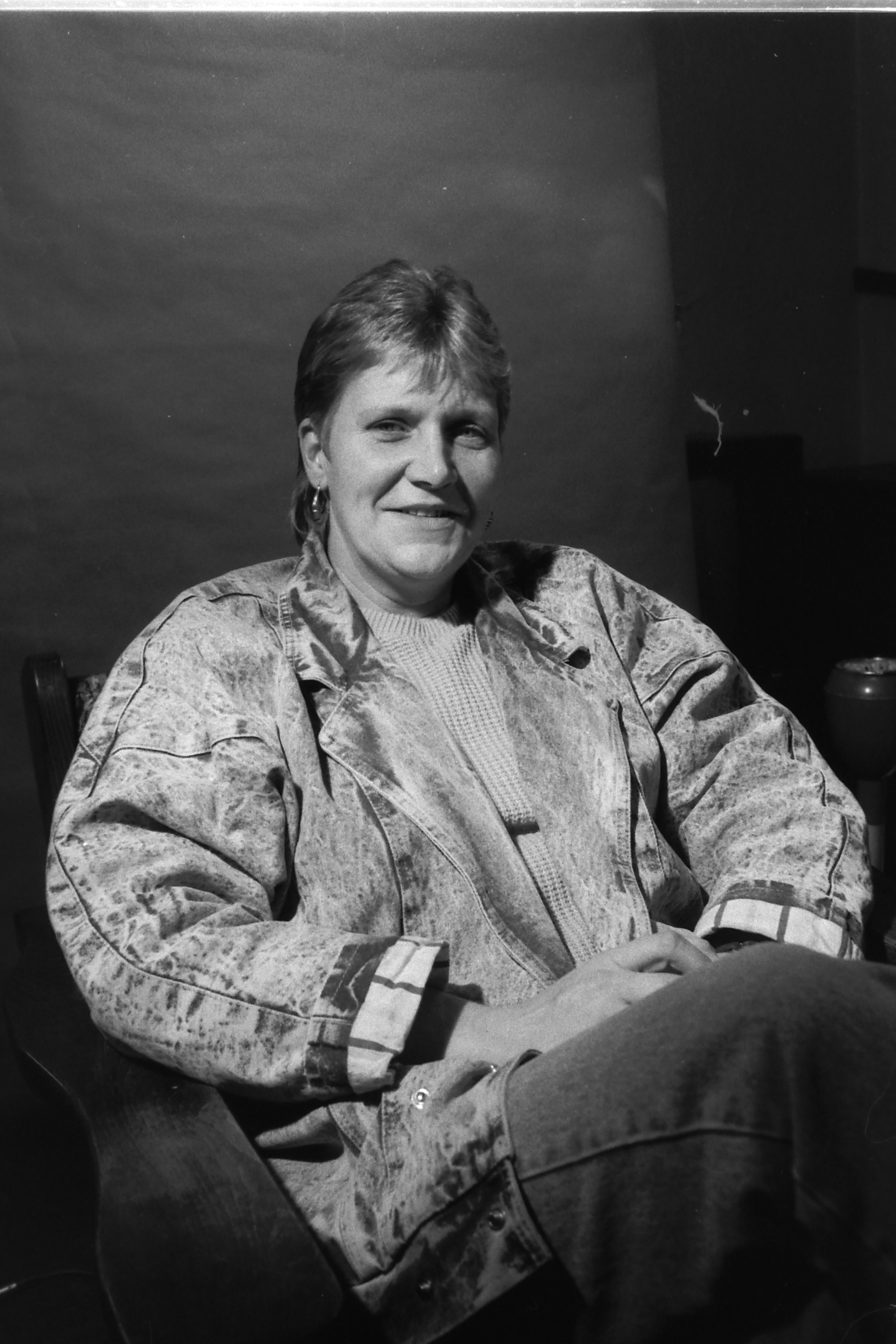
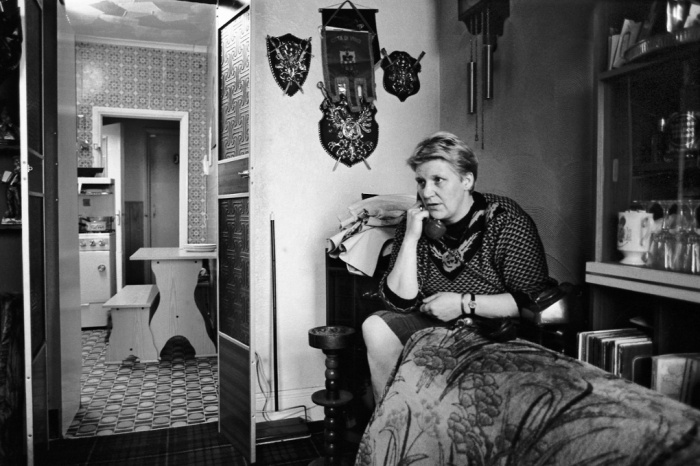
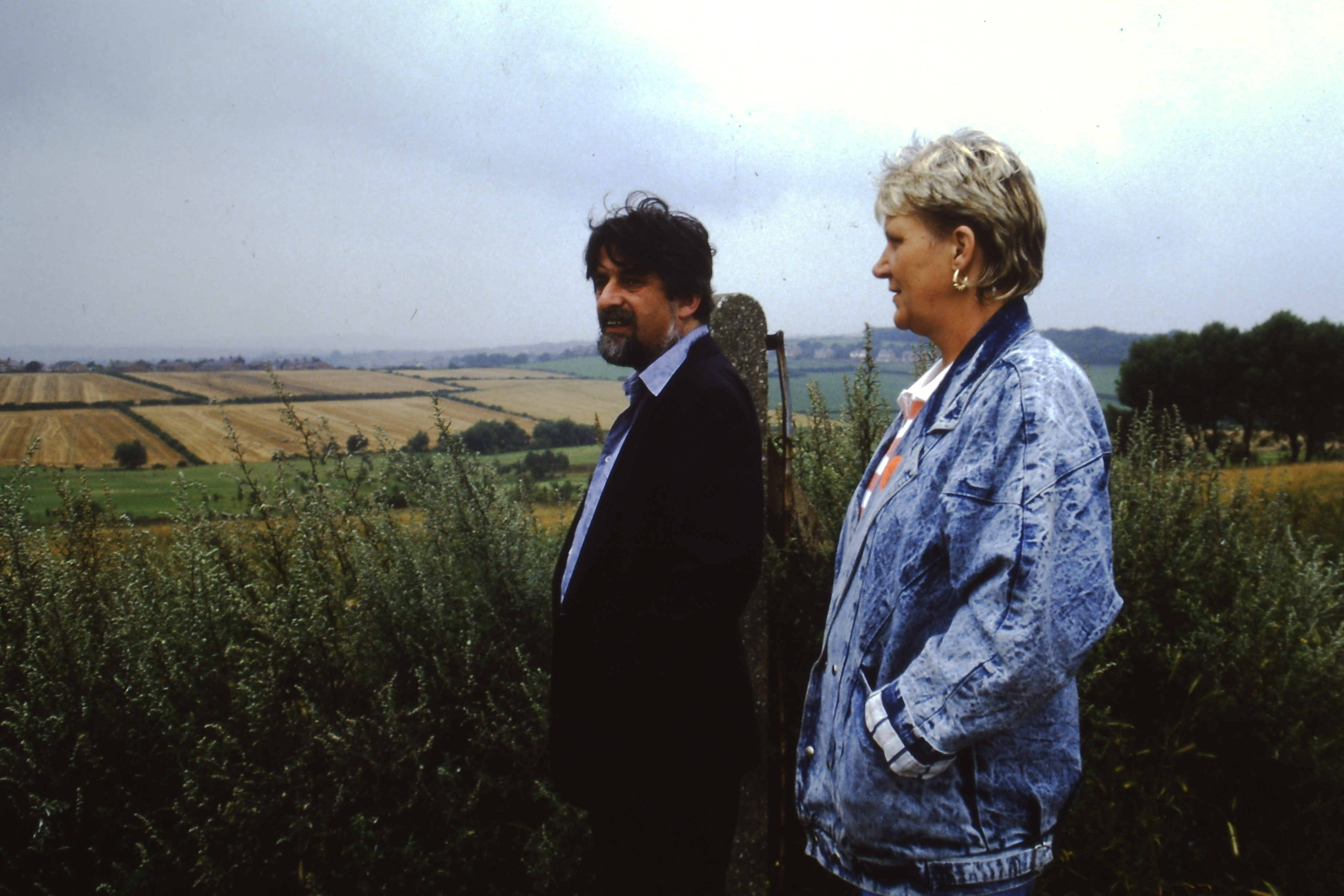
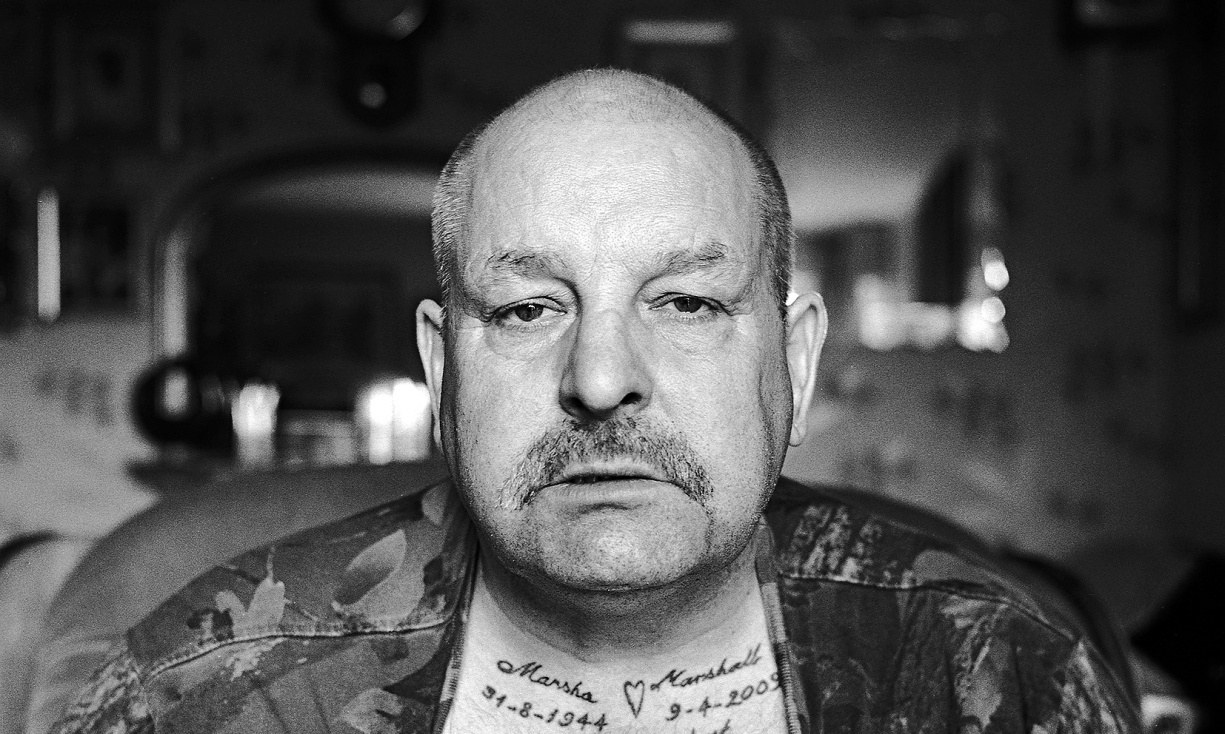
In the lead-up to the release of Marc Karlin-Look Againhere are a collection of portraits focusing on the people Karlin documented in his films. Up first is Marsha Marshall, secretary of the Women Against Pit Closures (Barnsley Group) during the 1984-85 Miners’ Strike.
Marsha Marshall, who died in April 2009, lived with her miner husband, Stuart ‘Spud’ Marshall, in Wombwell, near Barnsley at the time of the 1984/84 Miners Strike. Spud was one of the first to be arrested during the dispute on a picket line in Nottinghamshire. This event politicised Marsha, and soon with others she founded the Women’s Against Pit Closures. Having never been abroad before, her duties as secretary of the WAPC, took her to France, Italy, Bulgaria, and the USSR – and in Rome she spoke at a rally to over 4,000 Italian trade unionists.
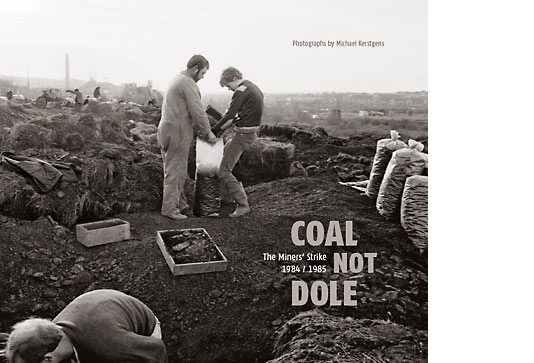
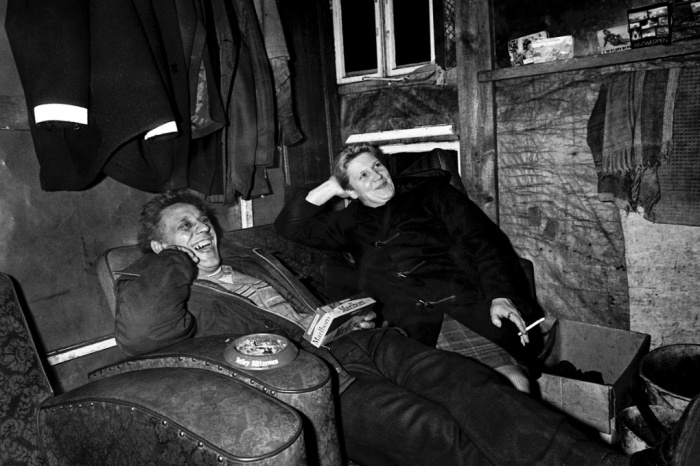
Marsha is featured in Michael Kerstgens’ photographic collection, Coal Not Dole, The Miner’s Strike 1984/85 published by Peperoni Books. In 1984, Michael Kerstgens was a young German photography student who decided to travel to Britain and document the dispute. People were wary of him, as an outsider, and so he was limited to photographing events on the periphery.
However, things changed when he met the activist Stuart “Spud” Marshall. Spud trusted him immediately and opened the door for Kerstgens to photograph not only the heat of the action but also more intimate moments beyond the picketing, violent clashes with the police, and public discussions on the political stage. Kerstgens photographed soup kitchens, meetings behind closed doors, and the wives of striking miners, including Marsha.
Around 1986, Karlin interviewed Marsha Marshall for his film ‘Utopias’ – a film about socialism in Britain, broadcast on Channel 4 in 1989. Marsha would be one of the socialist voices in his film. Karlin, here, recalls his creative intentions,
I was filming Utopias in 1986, around the time Margaret Thatcher said she aimed to destroy socialism once and for all. I was determined to say otherwise, obviously. I wanted to do portraits of different socialism, take ideas about it and so on, but to put them all on one boat. Utopias was like a banquet table. I liked the idea of having somewhere all these people could be together, where David Widgery, Sheila Rowbotham and Jack Jones, Sivanandan, Bob Rowthorn, and the miner’s wife, Marsha Marshall, were all going to be there. All these visions of socialism were great. I am totally naïve, but I shall remain to the end, so I just wanted them all at the table. Can you imagine? No: But the film did.
This is an edited extract of Marsha’s chapter from ‘Utopias’. In this section she recalls the miners’ strike and speaks about her fears for the future of her community.



 marckarlin