…that which is still possible…


During the Cannes Film Festival in 1982, Wim Wenders set-up a static camera in a room at the Hotel Martinez. He then invited a selection of directors to answer a series of questions on the future of cinema: “Is cinema a language about to get lost, an art about to die?”
The directors, in order of appearance were:
Jean-Luc Godard
Paul Morrissey
Mike De Leon
Monte Hellman
Romain Goupil
Susan Seidelman
Noël Simsolo
Rainer Werner Fassbinder
Werner Herzog
Robert Kramer
Ana Carolina
Maroun Bagdadi
Steven Spielberg
Michelangelo Antonioni
Wim Wenders
Yilmaz Güney
Each director was alloted 11 minutes (one 16mm reel of film) to answer the questions, which were then edited together by Wenders and released as Room 666 in 1982. Interestingly each director is positioned in front of a television, which is left on throughout the interview. It’s a simple and effective film, and the most interesting contributors are the usual suspects. Godard goes on about text and is dismissive of TV, then turns tables by asking Wenders questions; Fassbinder is distracted (he died within months) and quickly discusses “sensation oriented cinema” and independent film-making; Herzog is the only one who turns the TV off (he also takes off his shoes and socks) and thinks of cinema as static , he also suggests movies in the future will be supplied on demand; Spielberg is, as expected of a high-grossing Hollywood film-maker, interested in budgets and their effect on smaller films, though he is generally buoyant about the future of cinema; while Monte Hellman isn’t, hates dumb films and tapes too many movies off TV he never watches; all of which is undercut by Turkish director Yilmaz Güney, who talks the damaging affects of capitalism and the reality of making films in a country where his work was suppressed and banned “by some dominant forces”.
<p><a href=”http://vimeo.com/16992326″>Wim Wenders – Room 666 (1982)</a> from <a href=”http://vimeo.com/user5262516″>Cpá TV</a> on <a href=”https://vimeo.com”>Vimeo</a>.</p>Via The World’s Best Ever and Dangerous Minds


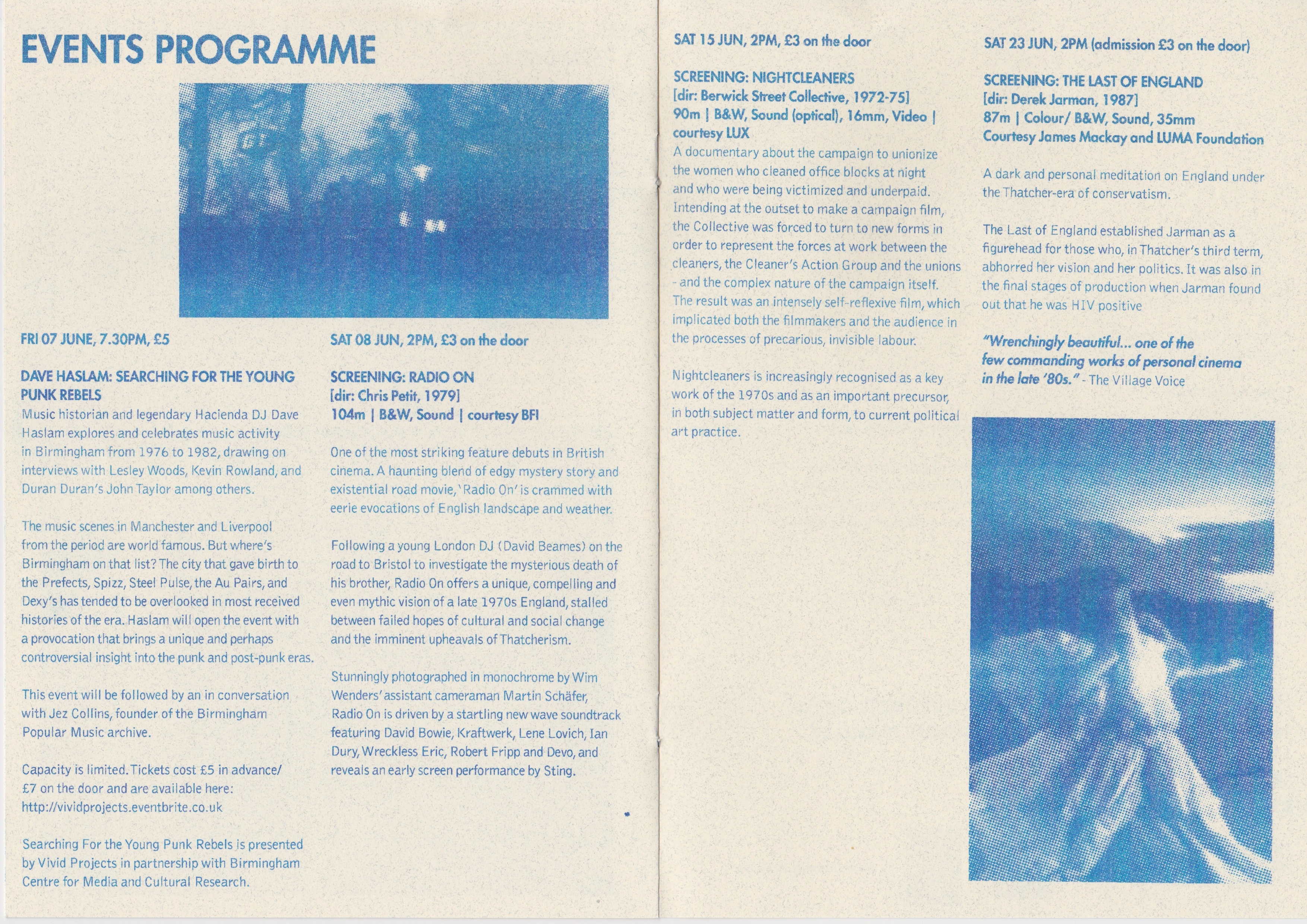

This new exhibition draws together works from three strikingly independent filmmakers key to the radical trajectory of the post-1976 English underground movement. Connected by themes of left field personal politics, history and nationality, and marked by an intense visual sensibility, Richard Heslop, Marc Karlin and Derek Jarman developed work both technically original and aesthetically radical.
WEEK TWO: THU 13 – SAT 15 JUNE EXHIBITION & EVENTS PROGRAMME
– – – – – – – – – – – – – – – – – – – – – – – – – – – – – – – – –
Thu 13-Sat 15 June, 12-5pm daily
EXHIBITION // Marc Karlin
Described as one of the most significant unknown film-makers working in Britain during the past three decades, Karlin (1943 – 1999) was a central figure in the radical avant-garde of the 1970s and made a major contribution to the shaping of Channel 4. Newly digitised works are shown including Utopias (1989), For Memory (1986), and Between Times (1993) alongside a one-off screening of Nightcleaners (1975) on Saturday 15 June. Courtesy the Marc Karlin Archive.
Running Times:
Thu 13 & Fri 14 Jun, 12-5pm // Utopias (2h 15m) and Between Times (50m)
Sat 15 Jun, 12-2.15pm // Utopias (2h 15m) and For Memory (1h 44m)
—————————–
Sat 15 June, 2.15pm (admission £3 on the door)
SCREENING // Nightcleaners [dir: Berwick Street Collective, 1975, 90m]
A documentary about the campaign to unionise the women who cleaned office blocks at night and who were being victimised and underpaid. Nightcleaners is increasingly recognised as a key work of the 1970s and an important precursor, in both subject matter and form, to political art practice. Courtesy LUX.
Following on from Vivid Project’s short introduction on Marc Karlin in March this year, three of Karlin’s films will be screened over a three days from tomorrow (13-15th June). Here is the flyer from the March event, promotional material for the June will be up soon.



Sheffield Hallam University Thursday, 13 June 2013 from 10:30 to 18:00 (BST) Sheffield, United Kingdom
“We want to make films that unnerve, that shake assumptions, that threaten, that do not soft-sell” Robert Kramer, ‘Newsreel’ Film Quarterly, Vol. 22, No. 2 (Winter, 1968-69), p.46, University of California Press
The late ’60s and ’70s saw the development of documentary film collectives in the UK that addressed the burning political issues of their day. They developed radical forms of independent film production and distribution prior to digital or the web and produced a large body of work, from short agitational cinetracts to sophisticated essayistic features.
The symposium seeks to re-ignite the work of this radical wave, to ask how they engaged with politics and film and how this might inform politically engaged filmmaking today. It will feature films, and filmmakers, from the ’70s generation alongside radicals of today.
Keynote Speaker: Federico Rossin (Critic and Curator)
Panelists include: Holly Aylett (Vertigo and ‘In the Spirit of Marc Karlin’ project) · Luke Fowler (Artist, Turner Prize Nominee 2012) · Lina Gopaul and David Lawson (Black Audio Film Collective/Smoking Dog Films) · Ann Gueddes (Founder of Cinema Action) · Dan Kidner (Writer and Curator, recently published ‘Working Together: Notes on British Film Collectives in the 1970s’) · Christine Molloy (Artist, Desperate Optimists) · David Panos (Artist, Jarman Award Winner 2011) · Steve Sprung (Cinema Action/Poster Film Collective/Lusia Films)
RELATED TICKETED SHEFFIELD DOC/FEST SCREENINGS:
Wednesday 12 June · 18:45 · Showroom 2
‘The Poor Stockinger, the Luddite Cropper and the Deluded Followers of Joanna Southcott‘ (2012) by Luke Fowler
Thursday 13 June · 20:45 · Sheffield Library Theatre
‘The Stuart Hall Project‘ (2012) by John Akomfrah
The symposium is supported by: Sheffield Hallam University, Sheffield Institute of Arts, Art and Design Research Centre, Sheffield Doc/Fest
Producers: Virginia Heath, Esther Johnson, Steve Sprung
Enquiries: k.a.christer@shu.ac.uk · +44 (0)114 225 6918
Links: https://twitter.com/time4invention ·http://www.shu.ac.uk/research/c3ri/events/a-time-for-invention

Voyages (1985), the first part in Marc Karlin’s extraordinary Nicaraguan series, comprises of stills by the American photographer Susan Meiselas. Between 1978 and 1979, Meiselas captured the two revolutionary insurrections which brought the FSLN to power in Nicaragua, overthrowing the fifty year dictatorship of the Somoza family. The film is in the form of a letter, written by Meiselas to Karlin. Through her own words, the film interrogates the responsibility of the war photographer, the line between observer and participant, and the political significance of the photographic image.
The film is composed of five tracking shots, each approximately ten minutes in length. Shot in a studio by Karlin’s cinematographer, Jonathan Bloom, the camera glides slowly over Meiselas’ blown up stills, shifting focus between images in the background and foreground, allowing the editing to be achieved in camera. The mediative camera movement accompanying Meiselas’ words, creates a distance for the audience, reflecting the photographer’s own separation from the events she witnessed. The studio space was a form Karlin used repeatedly, layering his films with structured, contemplative intervals in between segments of exterior, vérité investigation. Inside the ‘dark chamber’ objects, figures and monitors bearing images are caught in a single shot, gradually revealed by the meandering camera movement. The studio acts as a immersive space of thought and pre-empts the installations and large scale multi-screen projections within the gallery space today.
A new cut of Voyages is now being shown at Iniva in a film programme curated by The Otolith Collective. When broadcast by Channel 4 in October 1985, the film drew criticism due to the fact that Meiselas’ words were narrated by a British actress, whose RP delivery lends the film an unwanted class distinction. A letter from the archive explains Karlin’s decision. Originally, Karlin wanted to narrate the film. This was strongly objected to by Alan Fountain, the commissioning editor of Channel 4’s The Eleventh Hour, on the grounds of feminist politics – it was a women’s experience therefore a woman should read it. Karlin disagreed, feeling that after the popular revolution, men and women should be able to work together, and not be seen as appropriating a women’s experience. Already having reservations about the possibility of sustaining a British audience’s attention at 10pm with 45 minutes of stills, Karlin’s own doubt unfortunately kicked in – would his voice bore the audience?
Karlin went back to the drawing board and produced three choices, 1. to get Meiselas to read the letter out herself. 2. To get an American to play Meiselas. 3. To get an English woman to read the letter. Karlin adamantly stated the original intention of the film was that the letter would be read out by the receiver, rather than the writer. If he used Meiselas’ voice, it would be the sender’s voice addressing the images rendering the film one-dimensional. If he used an American voice, the same objections regarding the sender/receiver objections would come into play. So, Karlin opted for a female, English voice; albeit one that connoted privilege, running contrary to progressive politics at the time and the new found pluralism of Channel 4.
Recently in the archive, a recorded voiceover by Marc Karlin was discovered on a umatic, and after a discussion between Susan Meiselas and Hermione Harris, Karlin’s partner, it was decided Karlin’s voice would narrate the film. Voyages is being screened at Iniva until the 18 May.
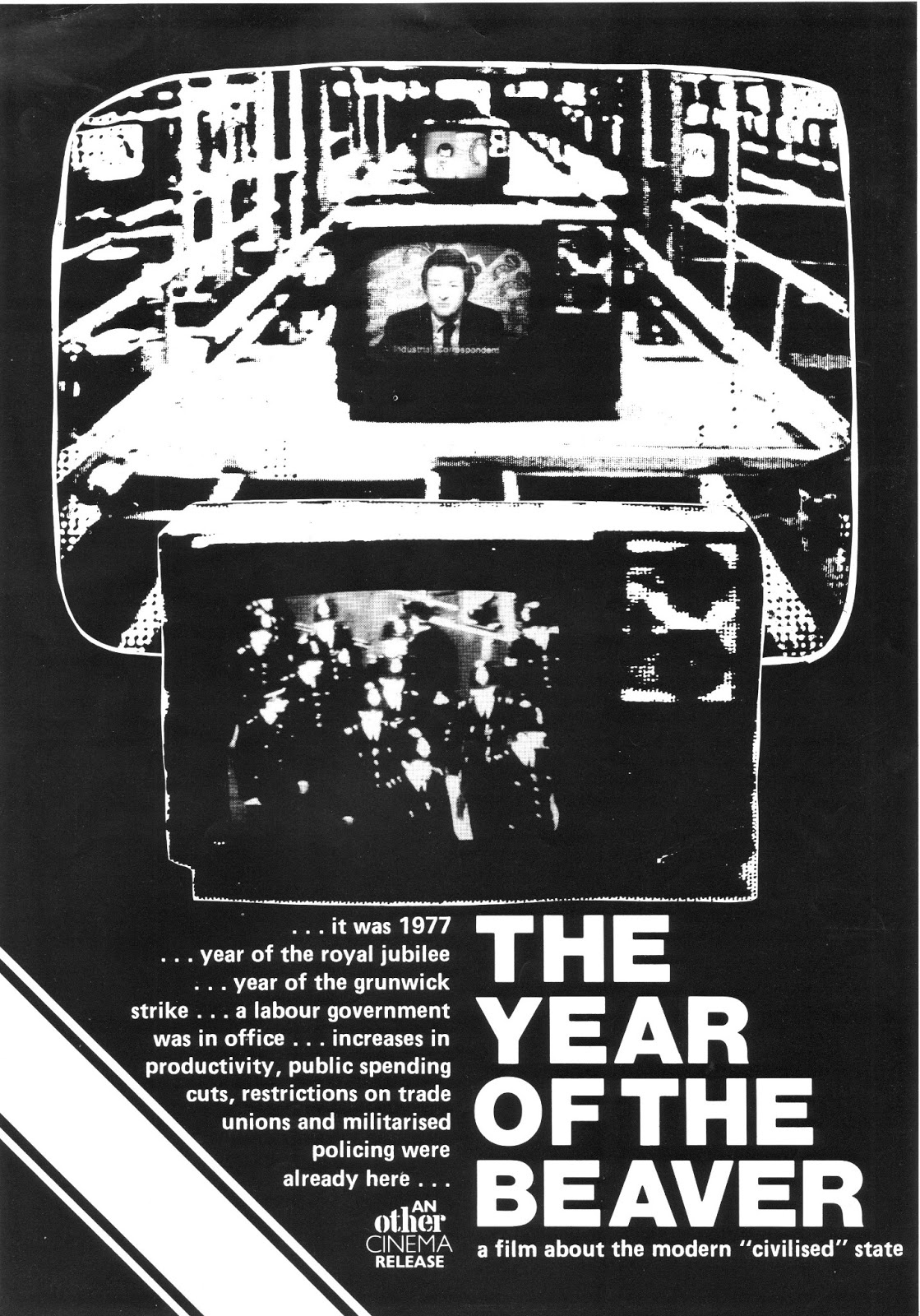

The Year of the Beaver (1985), directed by Steve Sprung, Dave Fox and Sylvia Stevens, recently screened by Radical Islington earlier this month, focuses on the industrial dispute at the Grunwicks photographic processing plant in Willesden, London in the summer of 1977. The workforce, predominately consisting of British Asian women, most of whom had only recently arrived in the UK, decided to go on strike over the issue of trade union recognition. The strike lasted for two years.
Jack Jones, the General Secretary of the Transport and General Workers Union (TGWU) under the Callaghan government, had tagged 1977 the ‘Year of the Beaver’ in an endeavour to encourage productivity and revitalise confidence in union-management relations. Contrary to this optimism, weaving workers interviews with news footage, the film reveals issues of race and gender discrimination in the workplace, media misrepresentation and dubious trade union conduct, all intensified on the picket line by an excessive police presence. Fundamentally, Year of the Beaver reveals the epoch transition from the post-war consensus in Britain, underpinned by the Keynesian economic model, to the neo-liberalist attitudes and policies adopted by the Thatcher government. The film depicts the inauguration of the post-Fordist paradigm – the casualised, flexible, temporary, outsourced working life to which we have now grown accustomed.
Steve Sprung, the film’s co-director and editor, was a member of Cinema Action, a leading independent film group, which became one of Channel 4’s first ‘independent sector’ workshops, a founder member of Faction Films and member of the Poster-Film Collective. In addition, Steve was a key collaborator with Marc Karlin and Lusia Films. Here is an excert from a wonderful article written by Steve for Vertigo magazine recalling his collaboration with Marc Karlin.
It was this Thatcher period which formed the context for my work with and for Marc. My background had been in a more agitational cinema, but I had been struggling for years, labouring away in the basement under Lusia Films, with a film about a failed strike under the previous Labour government, and its role in laying the ground for the Thatcherism that was to come. How to talk about events which had been mischaracterised both by the dominant media industry and by the working classes’ own trade union and political organisations? How to reveal this massive content, tell this necessary story, and find an adequate form in which to do it? This film, The Year of the Beaver, finally emerged in the early eighties. It manages to create multiple layers of meaning, drawing connections between the myriad things it had been necessary to take on board. When he saw it, Marc hugged me. This, I felt, was our first real meeting.
Steve Sprung would act as cameraman, editor and narrator on five films directed by Marc Karlin, including Between Times (1993), an essay on the future of the left and the search for viable alternatives, and The Serpent (1997), an indictment of the left’s demonising of Rupert Murdoch. Here are the first thirty minutes of The Year of the Beaver (1985).
Script SPRUNG, Steve
Script STEVENS, Sylvia
Script FOX, David
Director of Photography SCHESARI, Nancy
Director of Photography SPRUNG, Steve
Photography SPRUNG, Steve
Production crew SCHESARI, Nancy
Editor SPRUNG, Steve
Editor STEVENS, Sylvia
Editor FOX, David
Editorial consultant RONAY, Esther
Title Design GREEN, David
Sound Editor MacGILLIVRAY, Carol
Narrator LAMONT, Anne
Narrator SPRUNG, Steve
Company Information
Other Cinema Ltd – Foreign Theatrical Distributor
Poster-Film Collective – Production Company
Faction Films – Production CompanyGLC Productions, Inc. – Producer Credit

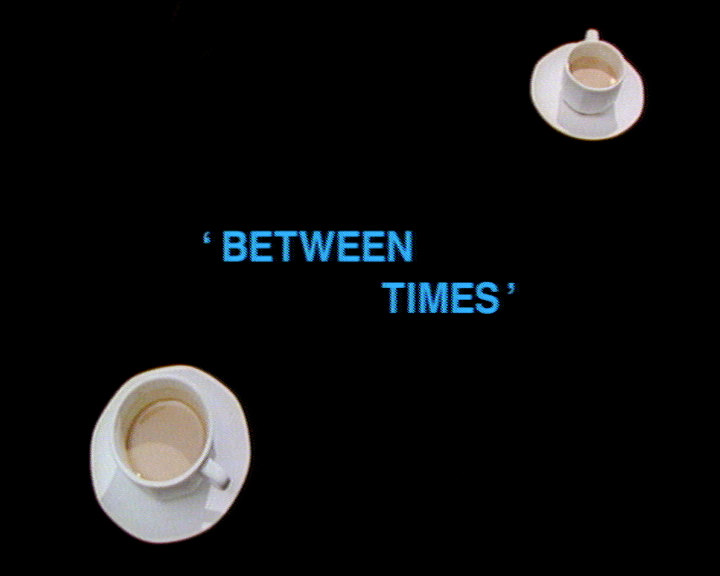







©The Marc Karlin Archive
All he had to do was shut his eyes, and on-rush this illness, that half gave him pleasure, half pain. It was a malady of on-rushing images that never seemed to stop… Marc Karlin, A Dream From The Bath (1985)
Last year, with support through The Lipman-Miliband Trust, the Spirit of Marc Karlin project digitised the twelve films directed by Marc Karlin. Here is a screen grab from a selection of the twelve in their timelines.
 marckarlin