This video essay from Fandor was made for the Thought in Action: The Art of the Essay Film season at the BFI in August 2013. It’s creator Kevin B Lee was commissioned by the BFI to explore the somewhat indefinable genre essay film. Lee says “I spent several weeks reflecting on what the essay film is. This led to a video essay and text published via the BFI’s magazine Sight & Sound that aimed to argue for what true value this as-yet loosely-defined mode of filmmaking could bring to a world that is already drowning in media. Using the video essay to take a polemical stance was a galvanizing experience for me, as it clarified a great deal of my own sense of purpose in being a film critic in a landscape where critical opinions are abundantly available. This video features the work of Santiago Alvarez, Jean-Luc Godard, Alain Resnais and many others”.
Join a special event dedicated to the art of the Essay Film, featuring the work of four diverse filmmakers shortlisted for the Arts Foundation Essay Film Award and a discussion with writer Sophie Mayer.
The shortlist, comprising Charlie Lyne, Marianna Simnett, Sam Stevens and Sarah Wood each approach the genre of the Essay Film from diverse perspectives in their practice.
Charlie Lyne’s films use existing footage cleverly pieced together to reveal disconcerting undertones such as in Beyond Clueless (2014). Sam Stevens‘ centres on ecological, social and political realities in Europe in his film Atlantropa (2009), which imagines a bridge across the straits of Gibraltar. Marianna Simnett uses surrealist techniques in her work to blend real and imagined events into magic-realist morality tales where she often plays protagonist undergoing significant physical duress such as The Needle and the Larynx (2016). Sarah Wood’s practice has been dominated by language. The 2014 work I Am A Spy focuses on archives, evidence and meaning.
Sophie Mayer concludes the event with a discussion on the rich history of the essay film, and its contemporary diversity as seen in the work of the featured artists.
This history covers the filmmaking tradition often referred to as cinéma militant, which emerged in France during the events of May 1968 and flourished for a decade. While some films produced were created by established filmmakers, including Chris Marker, Jean-Luc Godard, and William Klein, others were helmed by left-wing filmmakers working in the extreme margins of French cinema. This latter group gave voice to underrepresented populations, such as undocumented immigrants (sans papiers), entry-level factory workers (ouvriers spécialisés), highly intellectual Marxist-Leninist collectives, and militant special interest groups. While this book spans the broad history of this uncharted tradition, it particularly focuses on these lesser-known figures and works and the films of Cinélutte, Les groupes medvedkine, Atelier de recherche cinématographique, Cinéthique, and the influential Marxist filmmaker Jean-Pierre Thorn. Each represent a certain tendency of this movement in French film history, offering an invaluable account of a tradition that also sought to share untold histories.
ABOUT THE AUTHOR
Paul Douglas Grant is professor of cinema studies and cochair of research at the School of Architecture, Fine Arts, and Design, University of San Carlos, Philippines. He is also the editor of Lilas: A Graphic History of Cinema in Cebu.
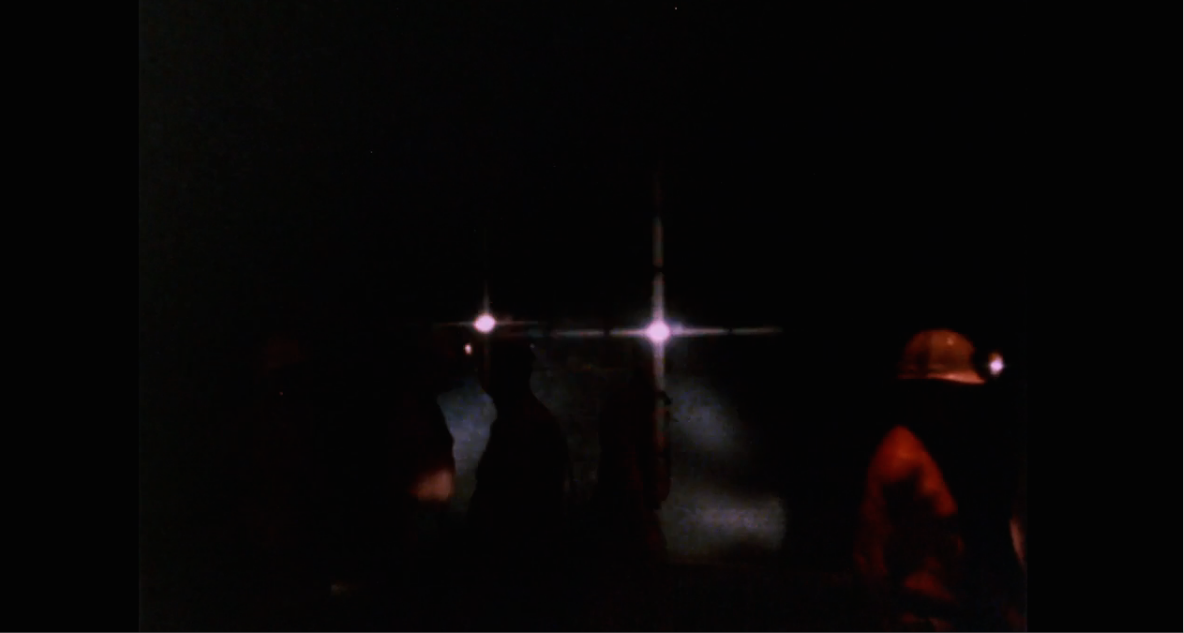
This stylish, low-budget and heartfelt campaigning film was made by the London Film-makers Co-operative, “in solidarity with the miners”. Shot on 35mm and originally screened before the main feature in independent cinemas around the UK during 1984-85, it was presented as an ‘advert’. Buckets were passed around and the money raised was given to the fund for striking miners. The year-long Miners’ Strike resulted in widespread hardship; many groups and individuals took part in fundraising ventures to support the strikers.
Director Richard Philpott had a background making unusual, experimental films about political causes. He usually shot on 16mm but in this case worked on 35mm so that the film could be screened alongside traditional narrative feature films. Philpott was a member of the London Filmmakers’ Co-operative, an organisation founded on left wing, non-hierarchical principles. The film parallels the darkness of the mining pit with the darkness of the cinema space while also highlighting the illuminatory force of the miners and the power of working together. It was made with an immediate, specific purpose in mind but still conveys its urgent, poetic qualities, even when viewed today.
Winner of the Golden Bear at the Berlin Film Festival, Marker’s documentary film, Description d’un combat/Description of a Struggle, examines the condition and circumstances of the young state of Israel and its citizens. The film was made at the time when the Israeli state was 12 years old, and borrows its title from Kafka’s short story It explores the historical, social, cultural and ethical contexts at the heart of Israel’s existence, and the impact of the tragic and not so distant past on the collective psyche of the nation.
Chris Marker prevented the broadcast description of a fight a few years after his shooting.In his article “The film hidden by Chris Marker,” published in Cahiers du Cinema from October 2013 (. No. 693, p 59), Ariel Schweitzer believes that this decision is probably for political reasons;He writes in 1967, Israel no longer represents this utopia which attracted Marker in the early 1960s, during which time he also went to China and Cuba to search for models of alternative society.
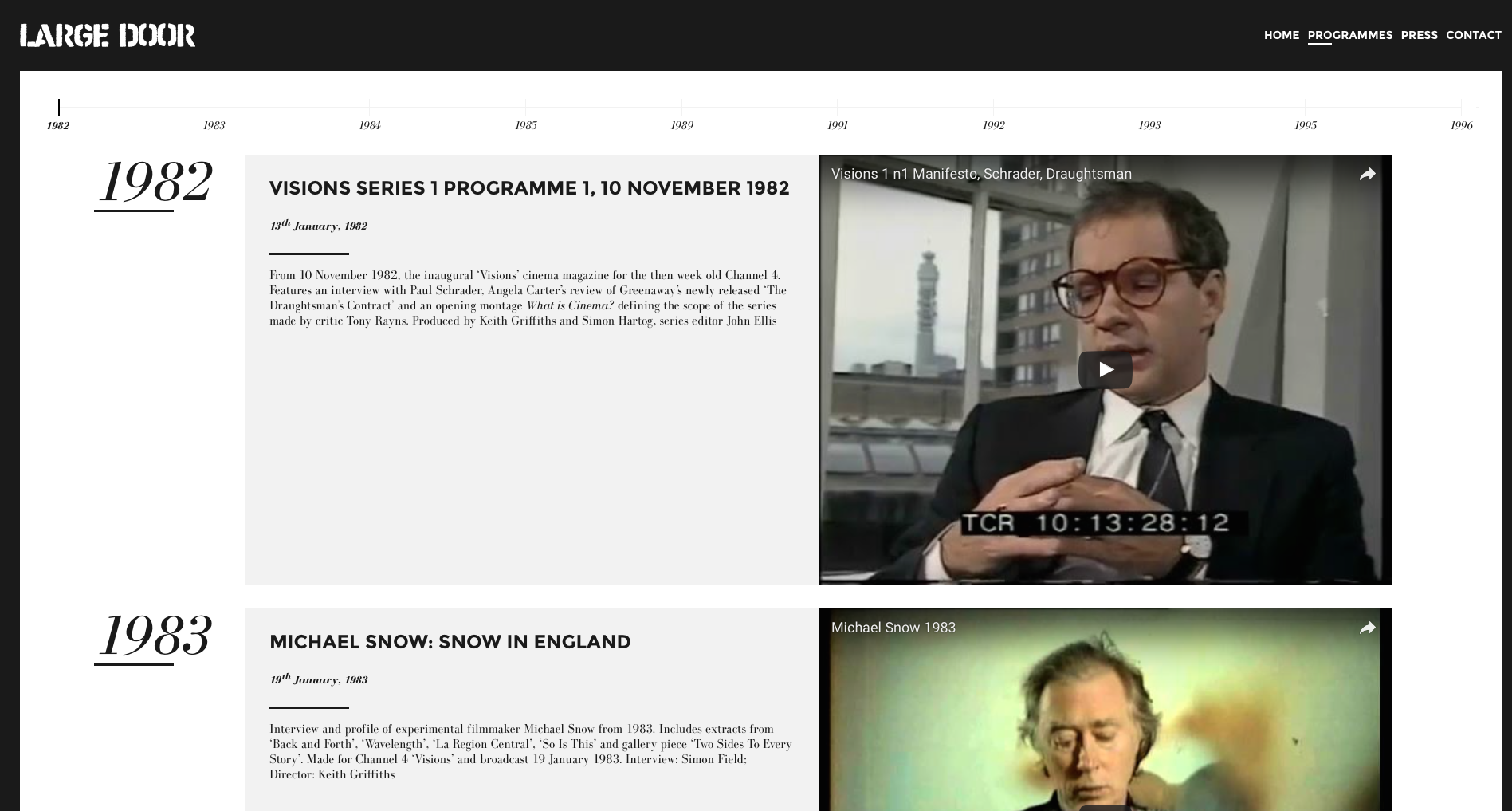
Large Door was founded in 1982 by Keith Griffiths, Simon Hartog and John Ellis as an independent production company to make programmes for the then new Channel 4. Large Door’s first commission was for Visions, an adventurous series of 15 programmes about world cinema. Visions eventually ran for 32 episodes until 1985, and subjects included a history of cinema in China, the work of Jan Svankmajer, contemporary cinema in Africa. Visions reported from the Cannes and Ouagadougou festivals and commissioned shorts from filmmakers including Chantal Akerman and Marc Karlin. Keith Griffiths left the company in 1984, but continued to make occasional films about cinema through Large Door including shorts on Raul Ruiz and the opening of the Frankfurt Film Museum.
Channel 4’s weekly press packs (1982-2002) ‘were the most comprehensive digest of programme information that any UK broadcaster supplied to the press’ and they offer an unique insight into Marc Karlin’s creative approach towards his ‘Nicaragua’ series. The films were broadcast on consecutive Monday nights at 10pm from 14th October 1985, in Channel 4’s The Eleventh Hour slot. Early promotion of Nicaragua lists working titles to each of the films and from these titles its clear that Karlin purposefully staggered the mode of address for the television audience. Karlin’s believed that for a new and foreign audience to discover post-revolutionary Nicaragua in 1985, they would have to sift through the existing filters imposed by mainstream broadcasters that had left Nicaragua and its history entirely obscured.
First on the production schedule was VoyagesFrom Far Away. It was a studio shoot, filmed in London.Displays bearing blown stills of Susan Meiselas’ photography depicting the two insurrections in Nicaragua 1978/79 were erected to allow Jonathan Bloom’s (the cinematographer on the series) camerawork to glide around them. Karlin believed that before geographically going to Nicaragua you had to interrogate the images coming out of the country first. This rule applied not just to the audience, but also to the film crew who would then travel to Nicaragua after the studio shot. From then on, with each segment, the camera and the audience would get closer to Nicaragua. The second film is an ‘establishing shot’ concentrating on the wide-ranging efforts of Sandinistas to recover their buried history. Then, there is ‘medium close up’ documenting the daily process of a Nicaragua newspaper. Finally, ‘a close up’, with a portrait of farmers in one of the most reactionary regions of Nicaragua, voicing their memories and their future fears.
The first film, Voyages From Far Away, this programme captures the inherent contradictions which inevitably result from being an outside in the middle of somebody else’s political struggle.
The second film, Nearer – The Making of a Nation examines how the Nicaraguans are recovering a sense of their own history, and through that a sense of their own nationhood, after half a century of being ruled as if they were a private limited company owned by the Somoza family.
The third film, Medium Close Up – In Their Time documents the way the Sandinsita newspaper, Barricada represents Nicaragua to its readers through several different reports on the war, the economy, the prison system and the political process leading up to the elections.
The final film, Portrait of a Region, is a more ethnographic film on the daily life of a village during the elections.
A booklet, New Independents on Four, produced by the Channel 4’s Independent Film and Video Department in 1983, comments,
…Karlin goes behind familiar Third World imagery to explore the deeper hidden feeling of what is at stake in a country like Nicaragua, developing for itself a new identity, nationhood and memory. What tensions and strains twist and contort that process in a country that builds itself between the conflicting claims of the USA (the heroic socialist struggle) and the Catholic church (the divine hand of God). Marc Karlin’s work through films like The Nightcleaners and 36 to 77 has been crucial to the development of new documentary forms adequate to the complexities of contemporary reality; in an invaluable combination of analysis, reflexivity and feeling his work points towards a truly politically responsive cinema…
Indeed, Karlin had received criticism from some quarters, notably The Nicaragua Solidarity Committee, for not producing a tubthumping portrayal of this new socialist utopia. But as Karlin’s partner Hermione Harris, who was in Nicaragua at the time of the revolution, points out Karlin’s films are not triumphalist works,
…The Sandinistas often referred to the revolution as ‘el processo’. In spite of all the written accounts, it is the moving image that can most clearly represent the process of social, political and economic change… it was also uneven and messy, contending with inexperience, inefficiency and apathy. Revolutions are made by people, not just philosophies and political slogans, and it is the ordinary Nicaraguan that Marc made visible – there is hardly a comandante, an FSLN leader, in sight… This focus on real lives leaves space for contradiction and opposition…
It is for this reason that Karlin stated his frustration of the scheduling of Werner Herzog’s film Ballad of the Little Soldier in a letter to Alan Fountain, the commissioning editor of the Channel 4’s Independent Film and Video Department. Herzog’s film focuses on the Miskito Indians, a group located in north Nicaragua who had formed anti-Sandinista guerrilla style organisations. The channel broadcast the film in between Karlin’s Nicaragua series on the basis of ‘bringing balance’ to the debate, something that Karlin thought he had already delivered upon.
Fountain, Alan. (1982) New Independents On Four. London: Channel Four.
Monday 14 October 1985, 10.00-10.50pm on Channel Four
With current speculation about the future of the Sandinista government in Nicaragua – under constant pressure from Washington – these four documentaries offer timely insights into the country and its situation. They were made by British independent Marc Karlin and commissioned for The Eleventh Hour, but have now been given a slightly earlier Monday slot.
Tonight’s opening programme looks at Nicaragua through the testimony and the photographs of American Susan Meiselas, hailed as the star photographer of the world-renowed Magnum agency, who became personally involved with the Sandinista forces while capturing their revolution on film. Between 1978 and 1979 she was in Nicaragua where she photographed the two revolutionary insurrections which led to the overthrow of the Somoza family, who for 50 years had led the dictatorship of the country. Her photographs were the means by which many people glimpsed what the Nicaraguan people were experiencing as the revolution developed.
Voyages which is in the form a letter written to the filmmakers by Susan Meiselas, also examines the inherent contradictions which inevitably result from being an outsider in the middle of someone else’s political struggle.
Writer: Susan Meiselas
Prod/dir: Marc Karlin
Prod co: Lusia Films
Commissioning editor: Alan Fountain, Independent Film and Video Department
Text taken from Channel Four’s Press Packs – read more here
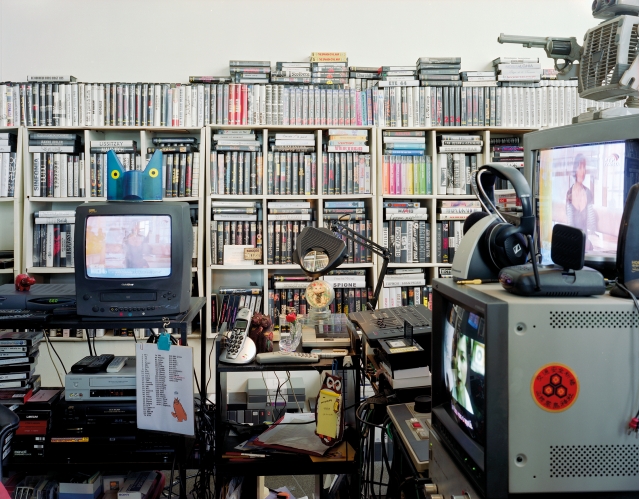
“Chris had a garage, a huge studio with drainpipes all across it. It was vast, and he put these little rolls of films all along the drainpipes, and then divided it onto countries, so you had Columbia, Peru, Cuba, Africa and so on. I entered this garage to find all these films from all these countries: the whole world was there. Right at the end there was Chris Marker on a platform with his editing table, and he looked like God. You had to walk past these films to reach him and sit down”.
Marc Karlin, (1999)
Looking at Class. Film, Television and the Working Class in Britain, S, Rowbotham & H, Beynon, (Rivers Oram Press:2001)
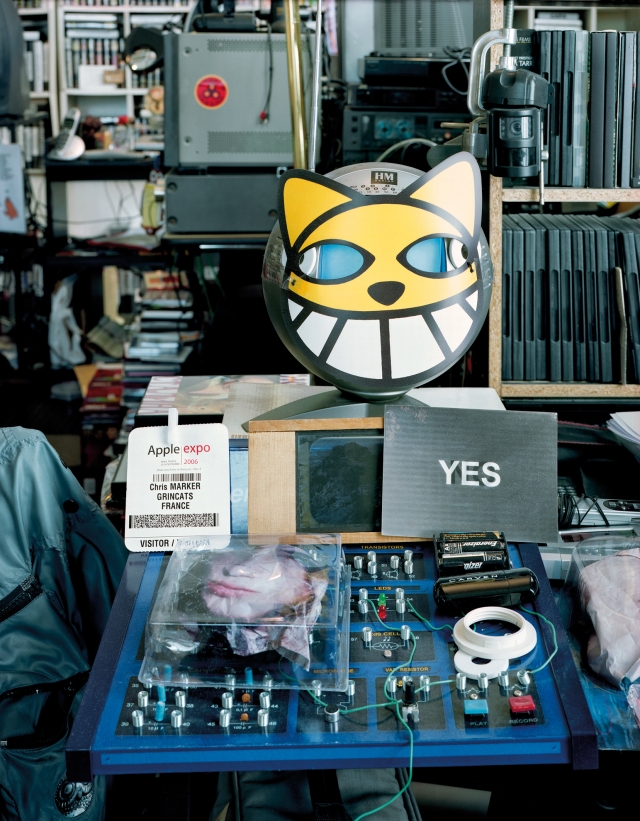
It was early 2002 and people still used answering machines rather than mobile phones. The recording clicked in and an extraordinary voice that sounded as if it had been mechanically produced asked the caller to leave a message “if you have something interesting or amusing to say”. I was already nervous that I was cold calling Chris Marker, legendary recluse and indeed general artistic legend. My anxiety intensified and I started to stutter out my message. “I am in Paris and I have a VHS copy of a film called The Magic Face and…” The receiver was picked up (I learned later that Chris screened all his calls) and a very human voice said, “You are the Messiah”. I have never been more startled by any single sentence addressed to me.
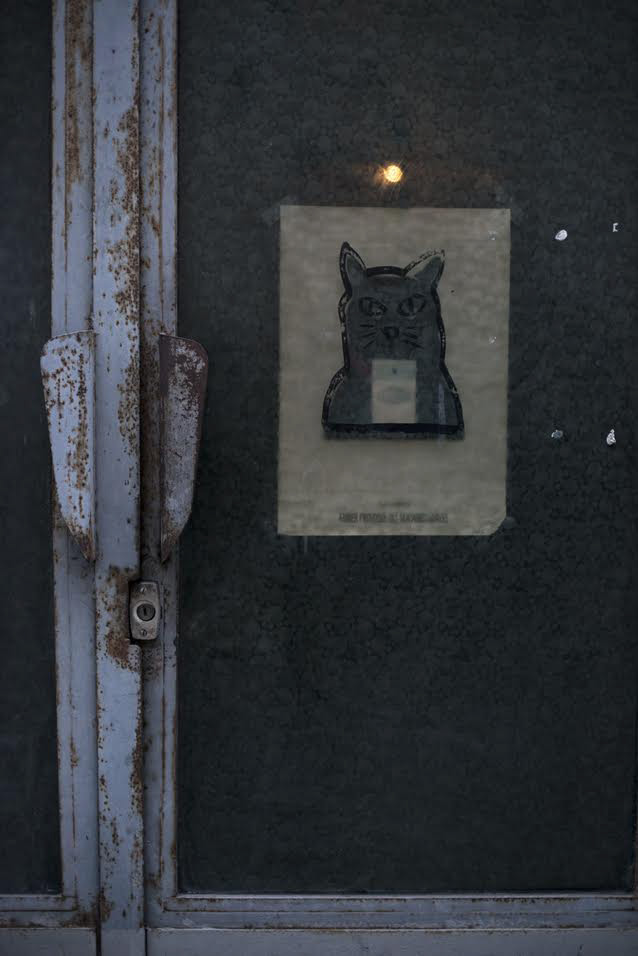
If I was the Messiah then John the Baptist was Tom Luddy. It was a few days earlier that I had seen Tom in Berkeley and asked him if he could get me an introduction to Marker. “I have the perfect calling card”, he said. “Chris has been looking for a copy of a film called The Magic Face for 50 years and I have just found a poor VHS copy. Here – deliver it.” And deliver it I now did. Marker said that he would be in the Latin Quarter, where I was living, the next Tuesday but his enthusiasm for the film was so overpowering that I insisted that I would bring it immediately to him. His instructions were both precise and disorienting. I had to go to a Metro station I had never heard of, cross under a disused railway I had never seen, walk down a narrow street, the rue Courat, find a huge house with an array of bells and names. Then I was to choose the bell without any name and ring three times.
The Metro was Maraichers and over the next decade I was to come to know it and that part of the 20th arrondissement well. No tourist has ever set foot there and it corresponds to none of the conventional pictures of Paris but with its completely mixed and relatively poor population it is as good an image of contemporary France profonde as you can find. But that first day it was terra incognita. As I stood at the door of the house I wondered if I had wandered into a parallel universe.
Of course I had and in time I would feel at home there. But, for now, I felt extremely uncomfortable and slightly terrified as I waited for the door to open. Everybody knew Marker’s name (although Marker wasn’t his real name) but unlike almost any other twentieth century name there was no accompanying image. I had no idea what to expect. Suddenly, bounding down the steps came what at very first impression was a huge and agile monkey. Indeed I wouldn’t have been surprised if there had been a long and bushy tail to go with the completely bald head. Certainly he bounded back up the stairs with long agile leaps leaving me, thirty years his junior, toiling in his wake.




 marckarlin