Tagged: Marc Karlin
Return to Nicaragua 2015: Scenes for a Revolution premiere in Managua.

Carlos Fernando Chamorro presents a look back at the premiere of Marc Karlin’s Scenes for a Revolution (1991) in Managua last week, on his Esta Semana programme.
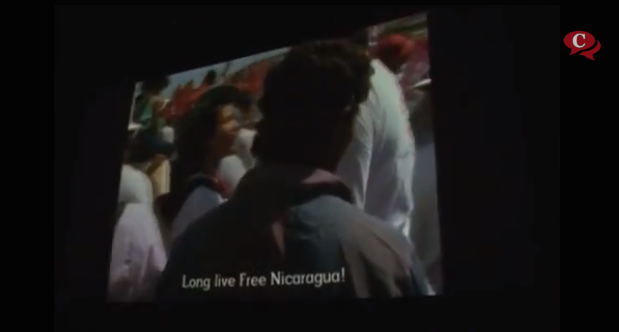
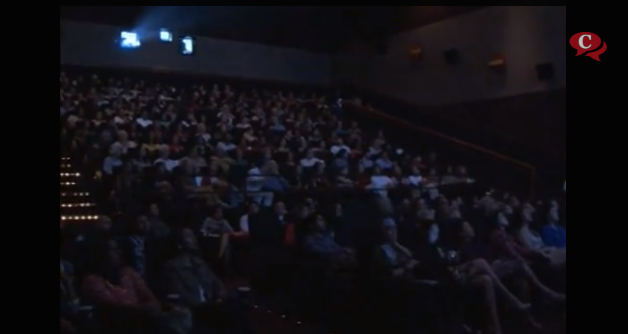

Return to Nicaragua 2015: El cine de Marc Karlin
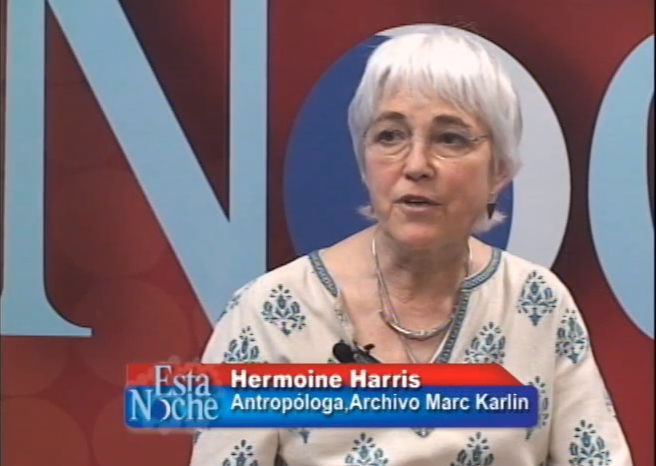
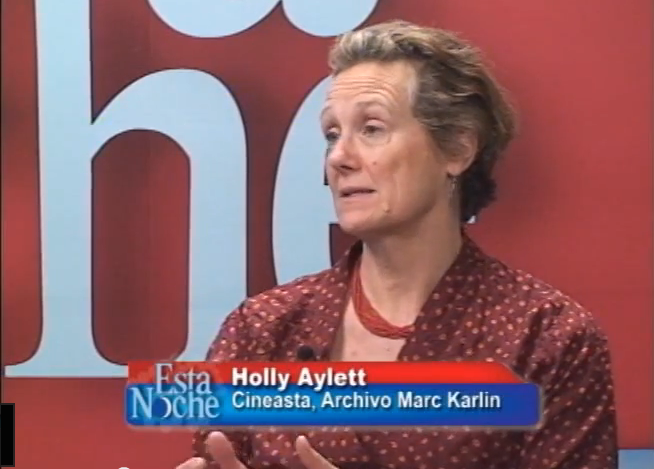
Carlos Fernando Chamorro invites Hermione Harris and Holly Aylett to discuss the cinema of Marc Karlin on his chat show Esta Noche. Thanks to Confidencial. (Sorry no English subs). 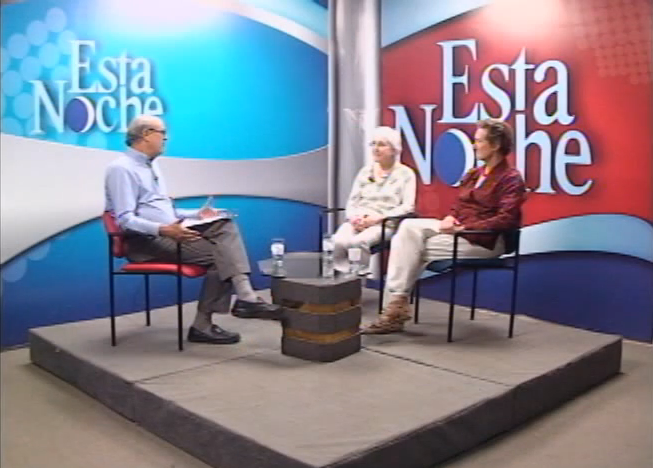
Return to Nicaragua 2015: Escenas de una revolución: Scenes for a Revolution

Hermione Harris and Holly Aylett have returned to Nicaragua this week to screen Marc Karlin’s Nicaragua Series (1985/1991), the first time the series has been seen in Nicaragua. Here is the trailer presented by Carlos Fernando Chamorro’s company Confidencial.
Return to Nicaragua – Susan Meiselas: Imágenes de la Insurrección Sandinista
Here is a video for Spanish speakers – a conversation between US photographer Susan Mieselas and Carlos F. Chamorro on his Esta Semana programme broadcast in Nicaragua, focusing on her photography capturing the two insurrections in Nicaragua 1978/79 and her work with Marc Karlin on Nicaragua Part 1: Voyages.
Audio from the Return to Nicaragua event will go up shortly.
Maybe, she wrote to us… Nicaragua Part 1 – Voyages
Voyages (1985), the first part in Marc Karlin’s extraordinary Nicaraguan series, comprises of stills by the American photographer Susan Meiselas. Between 1978 and 1979, Meiselas captured the two revolutionary insurrections which brought the FSLN to power in Nicaragua, overthrowing the fifty year dictatorship of the Somoza family. The film is in the form of a letter, written by Meiselas to Karlin. Through her own words, the film interrogates the responsibility of the war photographer, the line between observer and participant, and the political significance of the photographic image.
The film is composed of five tracking shots, each approximately ten minutes in length. Shot in a studio by Karlin’s cinematographer, Jonathan Bloom, the camera glides slowly over Meiselas’ blown up stills, shifting focus between images in the background and foreground, allowing the editing to be achieved in camera. The mediative camera movement accompanying Meiselas’ words, creates a distance for the audience, reflecting the photographer’s own separation from the events she witnessed. The studio space was a form Karlin used repeatedly, layering his films with structured, contemplative intervals in between segments of exterior observation.
A new cut of Voyages will be shown this Friday at the Return to Nicaragua event. When broadcast by Channel 4 in October 1985, the film drew criticism due to the fact that Meiselas’ words were narrated by a British actress, whose RP delivery lends the film an unwanted class distinction. A letter from the archive explains Karlin’s decision. Originally, Karlin wanted to narrate the film. This was strongly objected to by Alan Fountain, the commissioning editor of Channel 4’s The Eleventh Hour, on the grounds of feminist politics – it was a women’s experience therefore a woman should read it. Karlin disagreed, feeling that after the popular revolution, men and women should be able to work together, and not be seen as appropriating a women’s experience.
Karlin went back to the drawing board and produced three choices, 1. to get Meiselas to read the letter out herself. 2. To get an American to play Meiselas. 3. To get an English woman to read the letter. Karlin adamantly stated the original intention of the film was that the letter would be read out by the receiver, rather than the writer. If he used Meiselas’ voice, it would be the sender’s voice addressing the images rendering the film one-dimensional. If he used an American voice, the same objections regarding the sender/receiver objections would come into play. So, Karlin opted for a female, English voice; albeit one that connoted privilege, running contrary to progressive politics at the time and the new found pluralism of Channel 4. Recently in the archive, a recorded voiceover by Marc Karlin was discovered on a umatic, and after a discussion between Susan Meiselas and Hermione Harris, Karlin’s partner, it was decided Karlin’s voice would narrate the film.

Nicaragua 1: Ciudades Heroicas. Matagalpa, August Insurrection!
In the lead-up to the Return to Nicaragua event the archive is holding this weekend with Open City Docs, I will be posting a collection of Nicaragua themed articles around Marc Karlin’s Nicaragua series.
First is this 32 page graphic novel recently found in the archive, depicting the insurrection in the Nicaraguan city of Matagalpa in August 1978. Created by Róger Hamguien Morales of Ministerio de Cultura de Nicaragua in 1980.
6th DMZ International Documentary Film Festival 2014 17-24 September

Holly Aylett gave a talk
DMZ International Documentary Film Festival (DMZ DOCS) is an annual festival for documentary films presented jointly by Gyeonggi province, Goyang city and Paju city. Held in a buffer zone, the Korean Demilitarized Zone, DMZ Docs 2014 aims to present documentaries with the themes of peace, reconciliation and coexistence and to promote the documentary genre as a means of communication. Despite its short history, DMZ DOCS is growing as one of the most important documentary showcases in Asia.
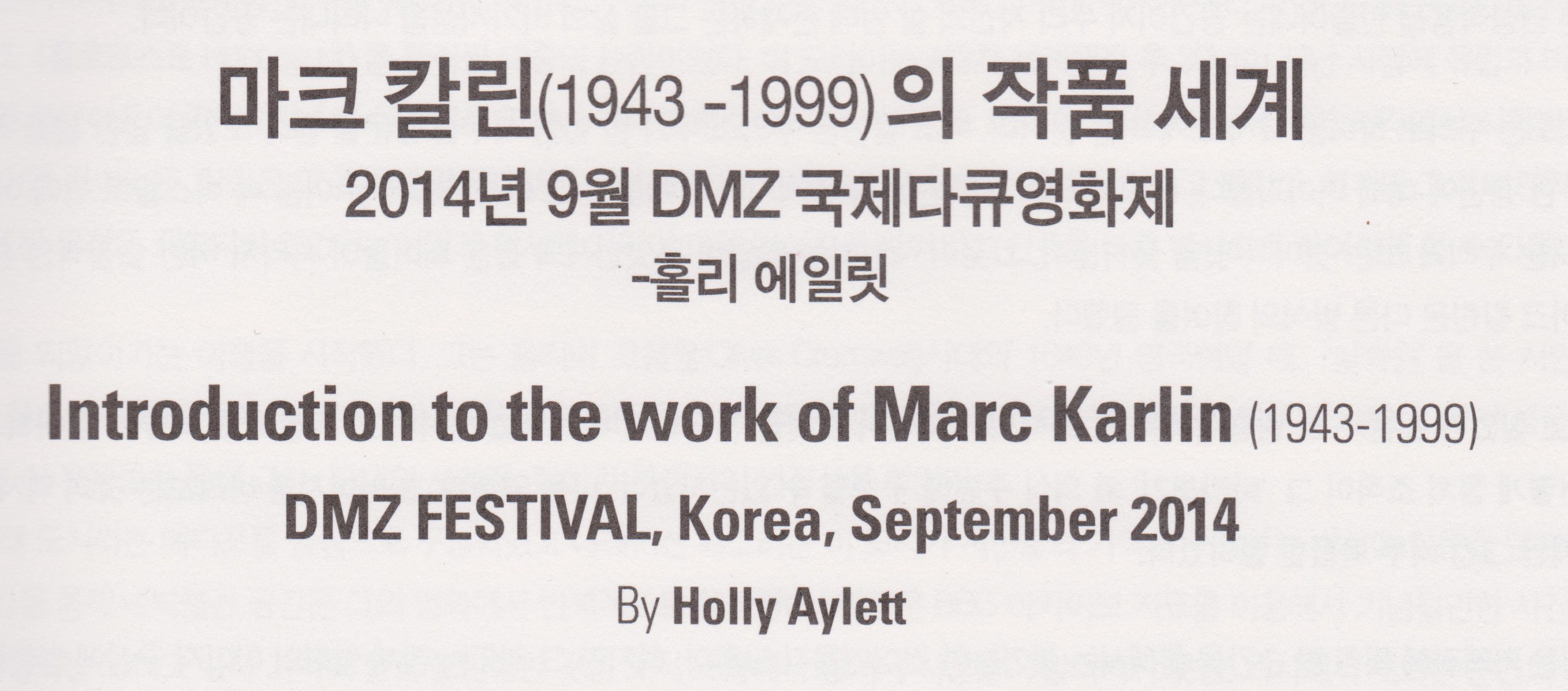
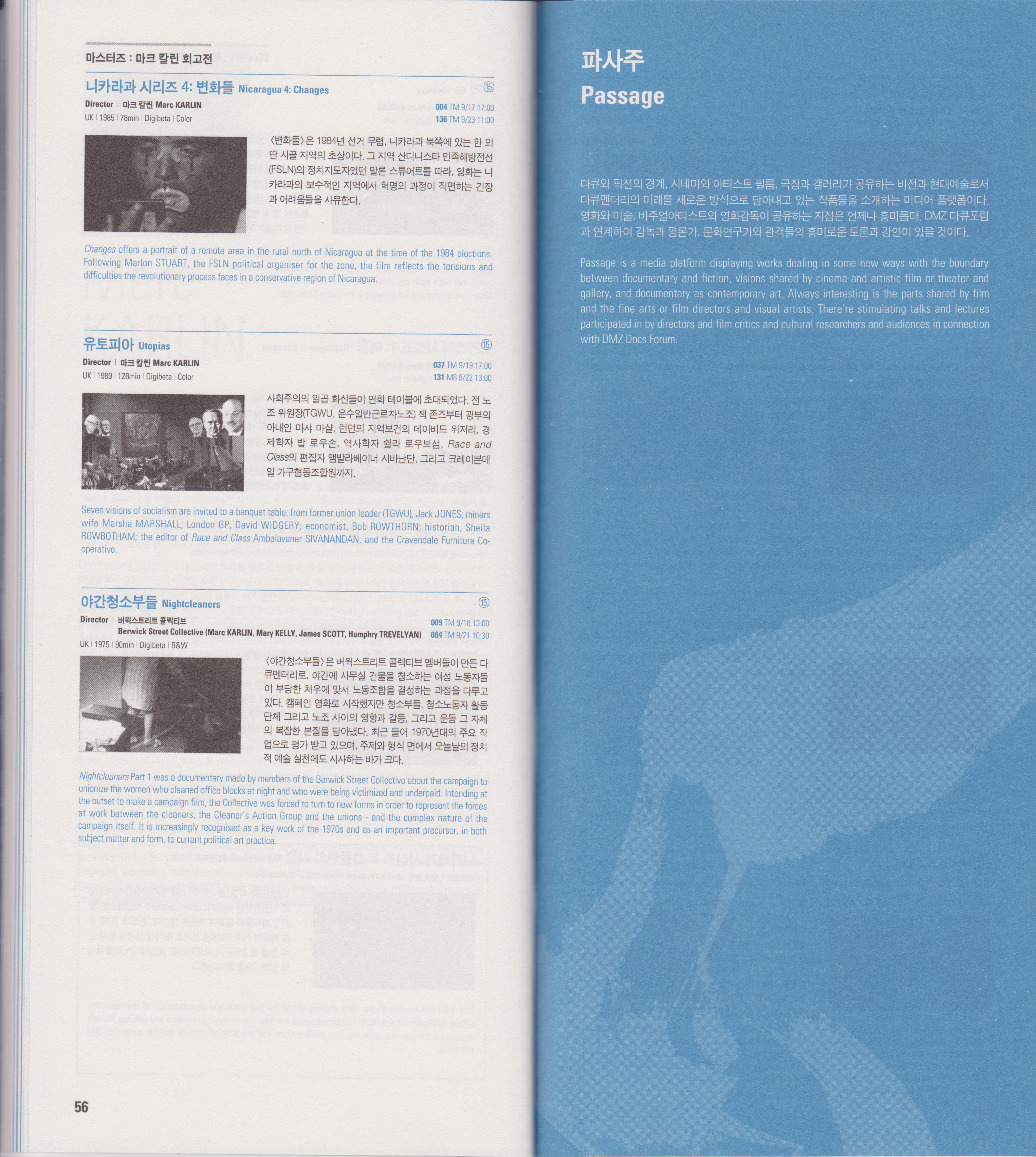
The festival held last month presented more than 110 documentaries from around the world, including a retrospective on Marc Karlin’s work in Passage – a section committing to experimental form in documentary. Marc Karlin Archive’s Holly Aylett was present in Paju city to introduce the work of Marc Karlin.



DMZ’s artistic director, Jeon Sungkwon with Claire Kim, principal programme co-ordinator, in the DMZ office in Paju city.
RETURN TO NICARAGUA – The process of revolution through Marc Karlin’s remarkable documentary series

Marc Karlin Archive with Open City Docs, supported by University College London’s Institute of the Americas, presents:
RETURN TO NICARAGUA
The process of revolution through Marc Karlin’s remarkable documentary series
Free screenings, panels and dialogues
Fri 21 – Sun 23 November 2014
UCL, Darwin Building, Gower Street, London, WC1E 6BT
Nearest tube: Euston Square/Russell Square
35 years on from the Sandinista revolution, a very rare opportunity to view one of the most committed documentary projects of the late twentieth century in its entirety – Marc Karlin’s Nicaragua series (1985/1991).
International guests, including world-renowned photographer Susan Meiselas, and Nicaraguan journalist Carlos Fernando Chamorro, offer first hand testimony together with Karlin’s film-making team:cinematographer Jonathan Bloom, former Channel 4 Commissioning Editor, Alan Fountain, researcher Hermione Harris and editor Monica
Henriquez.
Friday 21st
19.00 Welcome – Hermione Harris
Nicaragua Part 1: Voyages (1985)
20.15- 21.00 Q&A with Susan Meiselas
Saturday 22nd
09.30 Tea and Coffee
10.00 Introduction by Andy Robson
10.15 Nicaragua Part 2: The Making of a Nation (1985) (80mins)
11.45 Q&A with Jonathan Bloom.
12.30 Lunch
13.30 Nicaragua Part 3: In Their Time (1985) (70mins)
14.40 Nicaragua Part 4: Changes (1985) (89mins)
16.10 Break
17.00-18.30 Platform 1: Revolution and Memory. Chaired by Holly Aylett,
with Jonathan Bloom, Carlos Fernando Chamorro, Alan Fountain, Hermione
Harris, Monica Henriquez and Susan Meiselas.
Sunday 23rd
10.00 Scenes For A Revolution (1991) (110mins)
12.00–13.30 Platform 2: Open discussion. Chaired by Holly Aylett
with guest speakers.
To book your place
http://www.eventbrite.co.uk/e/return-to-nicaragua-the-process-of-revolution-through-marc-karlins-remarkable-documentary-series-tickets-13024537743
Marc Karlin (1943-1999)
On his death in 1999, Marc Karlin was described as Britain’s most significant, unknown film-maker. For three decades, he had been a key figure within Britain’s independent film community; he was a founding member of the influential seventies collective, the Berwick Street Film Collective; a leading player in the Independent Filmmakers Association, which played a critical role in opening up television through Channel 4, and a founding member of the group that published the independent film journal, Vertigo, (1993 – 2010).
Marc Karlin: Look Again, focusing on Karlin’s twelve essay documentaries between 1980 –1999, will be published by Liverpool University Press in Spring 2015. This is one of the outputs of The Marc Karlin Archive, set up by Holly Aylett, fellow documentarist and founder member of Vertigo; anthropologist, Hermione Harris, partner of Marc Karlin, and film archivist, Andy Robson. Since 2011, the Archive has organised and preserved Marc Karlin’s film and paper archive, and introduced new audiences to his work through events and screenings.
Please contact Andy Robson, Film Archivist at the Marc Karlin Archive
for more details.
The Sixth Side of the Pentagon (La sixième face du Pentagone) + Far from Vietnam (Loin du Vietnam) + Introduction by Kodwo Eshun
Barbican 7.30pm 13 May 2014 Cinema 2/ Introduction by Kodwo Eshun

On October 21 1967, over 100,000 marchers assembled in Washington D.C. for the Mobilization to End the War in Vietnam protest. It was the largest anti-war gathering yet, bringing together a wide cross-section of liberals, radicals and hippies. For many, this marked the transition from simple anti-war demonstration to direct action that aimed to stop the war machine. Chris Marker was there with a camera.
France 1968 Dir Chris Marker 28 min
During the chilling and feverish year of 1967, an international collective of world-renowned filmmakers (including Jean-Luc Godard, Joris Ivens, William Klein, Claude Lelouch, Alain Resnais and Agnès Varda) came together in a spirit of bonhomie and common purpose to make this profoundly unapologetic anti-war film, which captured the mood of events to come in 1968.
France 1967 Dirs Jean-Luc Godard, Joris Ivens, William Klein, Claude Lelouch, Chris Marker, Alain Resnais, Agnès Varda 115 min
In collaboration with Whitechapel Gallery and Ciné Lumière. The Whitechapel hosts the first UK retrospective gallery exhibition of his work.
Riddles of Marc Karlin and the Motion Analyser Projector
Here is a fascinating excerpt from the audio commentary track on the British Film Institute’s Dual Format Edition of Riddles Of The Sphinx (Laura Mulvey and Peter Wollen, 1977). In this sequence, Mulvey recalls the technique of re-filming found footage material using a motion analyser projector borrowed from Marc Karlin while he was filming 36′ to 77′ (known then as Nightcleaners Part 2) with the Berwick Street Film Collective.
 Via www.studycollection.org.uk
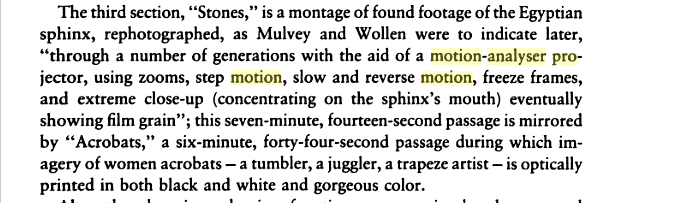
Avant-Garde Film: Motion Studies by Scott MacDonald (Cambridge Film Classics:1993)
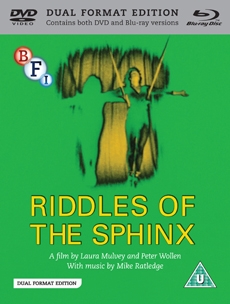
Laura Mulvey and Peter Wollen’s visually accomplished and intellectually rigorous Riddles of the Sphinx is one of the most important avant-garde films to have emerged from Britain during the 1970s. The second collaboration between Mulvey and Wollen, both of whom are recognised as seminal figures in the field of film theory, Riddles of the Sphinx explores issues of female representation, the place of motherhood within society and the relationship between mother and daughter. Composed of a number of discrete sections, many of which are shot as continuous circular pans, the film takes place in a range of domestic and public spaces, shot in locations which include Malcolm LeGrice’s kitchen and Stephen Dwoskin’s bedroom. BFI
This exclusive extract was produced by Catherine Grant for the scholarly website FILM STUDIES FOR FREE with the kind permission of Laura Mulvey and the BFI in September 2013.
 marckarlin